Introduce yourself. Where are you from? What are your hobbies?
My name is Patty Liu. I was born in Canada, but I grew up in Bejing, and came back in middle school. My hobbies are reading and art. I read sci-fi and fantasy, but recently I have been trying to branch out and read non-fiction.

Why U of T EngSci?
Back in high school, I was really interested in physics. I applied to programs in physics and earth science, and I got into some of them. However, looking up job prospects, I was not super set on them, so I decided to try out EngSci, which was more flexible, and I could decide later.
In your position as Aero Lead at UTWind, you were working on improving last year’s design and working with other subsystems to fix design components.
What did you learn in this role?
The transition from high school to university is truly different for every individual. I was fully remote my first year due to COVID, which definitely provided a different set of challenges.
What was your main role as the Aero Lead?
Unlike last year, where we had to design a new wind turbine, our design this year is based on last year’s design. We were more focused on improving the design and working with other subsystems to resolve the problems we had last year. There were some design components that did not work out, and we also addressed concerns about our own subsystem that were brought forth in the design competition last year.
How did you find the time for design teams?
I think I am luckier this year, because I am doing my PEY instead of being a full-time student. At first, it was manageable, but later my research duties became heavier, and it was difficult to focus on both, so I decided to take some time off the design team. I learned that sometimes I have to prioritize my own mental health and figure out what is more important to me, personally and career-wise, instead of trying different things and doing neither of those well. During the school year, I was more flexible with the time I put into the club, so I was more involved in the beginning of the term, and less so during exams.
Recommendations for incoming first years regarding extracurriculars?
In terms of time management, you should set priorities for different tasks. Not every task is equally important, and sometimes it is equally important to take a break; you don’t have to be working all the time. Sometimes it is beneficial to take time off, so you don’t make mistakes because you are tired. You can often find new perspectives on your work after taking a break and doing something else, which is also true for research. One thing to consider when joining is how much time you spend on these teams. Some require members to come and work during weekends, which is difficult for commuters.
Why did you pick your major (Machine Intelligence)? Did you always know that you wanted to go into MI or was there anything that led you to choose this major?
As I mentioned before, I wanted to do physics before joining EngSci. After that, I was interested in similar fields such as aerospace or robotics. On the other hand, even in high school, I was very interested in programming, but I didn’t want to be a software developer, and I didn’t know about machine learning at all. In the summer after second year, I had a research internship focused on hardware, as I was interested in robotics. I got to work on implementing machine learning algorithms on ultra-low power FPGAs. I found that interesting, so I started looking more into that. This was a last-minute decision that took me some time to figure out. Another reason I chose MI was because work was very flexible. I could work anywhere if I had internet access. This fitted into my future plans more than working at a fixed location.
You said your decision was very last-minute. Based on your experiences, what would you say to the incoming EngScis, some of whom have already decided which major to go into?
Having been in the same boat before, I think people should take more time to explore their interests. In university, you still have time to explore what you want to do, but it becomes harder to do that when you graduate. Your experiences are all connected. Being an aero lead doesn’t seem to tie into machine learning, but it gave me soft skills such as time management and reading research papers which carry over to other fields as well.
How is PEY? Did it complement what you learnt in EngSci? Why/why not?
Instead of spending too much time on a single topic, EngSci MI gave me a good overview of what the field is like. Through these introductions, I became interested in certain things which are now my research topic. Another thing I really appreciated was that I got introduced to reading research papers in our courses. It is important because machine learning develops fast, and we must stay on top of things. To reduce time spent reading each research paper while still grasping the main idea is helpful for the work I am doing right now. This takes a lot of practice, so it is good to start early. Something else EngSci taught me is dealing with failures. Sometimes things don’t work out the way we want them to, and this also holds for research. There are a lot of ups and downs, and you don’t always get your paper accepted despite the amount of work you put in.
Any tips for reading research papers?
At first, I spent too much time trying to understand everything in the paper. Papers are usually long, so it takes some time to go through everything. However, this isn’t always worth it. Sometimes, only the higher-level idea is needed, so focus on the abstract and the conclusion. If you want to learn more, start with the figures, which will tell you more about the results. If you want to implement what the paper did, that’s when you read the methods section.
How was the transition from high school to university?
During high school I had more free time outside of class, so I could finish my schoolwork and focus on my interests. Now, I have to put in more time into my academics, and it is no longer easy to understand everything. Outside of lectures, I had to take extra time to review lecture content, which was defeating at first, but it is relatively common, and you should not feel bad about it. That is why it is important to manage your time. It is impossible to do everything on the same day, so it is okay to push some tasks to later.
What is one piece of advice you want to tell incoming first years?
Explore your interests through extracurriculars and taking electives that extend beyond the scope of your major.
Alumni Interview with Cameron Robertson (0T8)
Could you please introduce yourself, including where you are from, the year you graduated EngSci and a quick history of your career and experiences since then?
My name is Cameron Robertson. I was born in Toronto – actually in Scarborough – but I grew up in the Philadelphia area in the USA before coming back to Toronto for school. I graduated EngSci in 0T8, and then I graduated with my master’s in 0T9 also from U of T, in the Institute of Aerospace Studies. Since graduating I’ve worked on a number of interesting human-powered projects.
Initially I worked on the human-powered ornithopter, which a team led by Todd Reichert and I had built while at the University of Toronto, and then finished and flew successfully shortly thereafter in 2009. It was the world’s first successful piloted flapping-wing aircraft. Then we founded Aerovelo and led a team to build the Atlas human-powered helicopter, which captured the 30-year-old Sikorsky prize for the first successful flight of a human-powered helicopter. That was in 2013. Then, in 2016 Aerovelo set the human-powered land speed record with the Eta speed bike. Ultimately, 89.59mph is the current speed that that vehicle holds. In between I was also working at a small company in Brampton called Brican, building one of Canada’s first domestic UAVs. It was all electric and designed for natural resources, environmental and wildlife applications, as well as some defense applications. So, there was a mix of human-powered and electric airplanes in the early days.

Since 2015, I’ve been at Kitty Hawk in Mountain View, California, working on vertical takeoff and landing (or eVTOL) vehicles, and in particular on the Flyer project. It’s an electric multicopter designed for one passenger, and it’s supposed to be the most accessible and easy to fly aircraft ever built. I’ve been working both in mechanical and hardware engineering and structures, as well as various managerial and director roles in engineering and flight-test. And now I’m working on a new R&D project at Kitty Hawk.
How was your initial transition from high school to Engineering Science? What were your first year impressions of EngSci and U of T?
The transition was pretty challenging for me. I had been at a good high school in the US, and I had taken all of the Advanced Placement college/university level courses that I could. But, obviously, the level of academic rigor, responsibility and demand was very high in Engineering Science. Among my earliest impressions were that I felt everybody in the class was smarter than me. People were very dedicated and brilliant in general. I thought that I was going to have a very hard time; fortunately I did not pay too much attention to where in the class I actually lay in terms of marks as time went on. People were also very outgoing and interesting, and so it was great to meet a lot of people to make new friends. Those were some of the most important parts of the transition: realizing that everybody was so smart, but also that everyone was amazing and wonderful.
How did your feelings at the start of first year compare to your feelings at the end of first year, about being surrounded by individuals who you perceived to be so smart?
In high school I felt that study was a lot more independent, actually – whereas in Engineering Science, I think the friends you make and their level of intelligence as you kind of gang together meant that for us it was a lot more codependent. We did a lot more work together, and I think that helped us all make it through. It’s like the old adage: “You want to work with people who are smarter than you.” I think that really pulled up my own level of academic rigor and effort, and I think I got a lot more out of the program, because I was lucky to be surrounded by very smart, very kind people who again were very sharing and very patient. Not to say that I was a dummy or anything, but being around so many great people helped me strive harder.
You and Todd Reichert originally developed the idea to build the Snowbird Ornithopter while playing rugby at U of T. How would you recommend students aim to split their time in terms of studying, extracurricular activities, and life? What was your strategy for this in university?
Todd and I had a lot of social overlap, and it was during practice at the intramural engineering rugby team that Todd first mentioned the ornithopter. I basically overheard that he was wanting to build this human-powered ornithopter, and I said that I would be interested in hearing more and getting involved. It was very lucky and one of those happenstance occurrences where you’re in an environment and you’re near people and you kind of collide. Funny enough, that probably changed the trajectory of my life (to be fair, maybe also Todd’s). We talk a lot about how we developed our own codependence as we worked on a lot of these projects. As far as generalized “how I would recommend people split their time,” as I say, I was not the most academic student. I think that in general, Engineering Science was really focused on making sure the academics and the learning program and the coursework was really well-conceived, well-executed and as effective for book-learning and real academic knowledge as it could be. My approach – not just because I was lazy, but also because I wanted variety – was almost to do the minimum coursework I could to achieve an acceptable result. That was still doing well in the realm of passing and taking away everything I think was really intended from the academic work, but almost all of my other time was split between either intramural rugby, the other EAA sports, social events with the SkuleTM community. As far as hobbies I did sports like skiing and sailing with family. Furthermore, as Todd and I were talking about the snowbird project, that ended up absorbing a lot of my free time over the next 2-3 years of undergraduate and master’s. I think that the academic work was really important and set a good foundation, but arguably it was the work outside of the classroom that had the biggest impact on my ultimate trajectory. The short answer would be: I did enough academics to achieve what I internally deemed an acceptable result, and besides that I tried to fill life with everything else that I could.
What was your favourite course in the formative years of the program? Did you have a least favourite course or subject?
I think one of my first, and maybe this is a common thread, was CIV102. That was a lot of people’s favourite, because it’s very hands-on, there’s a lot of historical context, which I loved, and there’s materials and structures, which is something that stayed with me for a long time. Most of my work in the subsequent decade was composite structures and analysis. And the experience in that course between the labs and the projects and some of the experimental work that was done was super interesting. So, that was definitely my favourite in first year, and maybe over years 1 and 2. In Year 2 Engineering Design was also very powerful, super hands-on, and had a lot of really great experimentation and collaborative working. A lot of people say that the Engineering Design class is hard and it definitely can be, but I actually wanted to spend as much time on that class as I could because it was all the things that I loved doing. I was in the electro-mechanical discipline. The only one that stands out as a really “not great” experience from first year was Linear Algebra, which is probably the case again for a lot of students. Gabe D’Eleuterio taught my last lecture, and I just squeaked by in that course. In my whole university career, that was the one that I came closest to failing. In the last lecture he said, “Well, the good news is, most of you will never have to touch this subject again.” And I breathed a sigh of relief and thought, “Oh, thank god.” And then he said, “However, those of you who go into Aerospace will see this all the time.” And at that point I was already pretty set on Aerospace so I was like, “Oh, dear.” That was interesting. It was not hard for the quality of the teachers, it was just not a subject I got really well. It was very high level math.
Non-academically speaking, what do you think was the biggest thing you learned from Engineering Science?
I don’t think it’s bad for university students to hear, but basically I think I’ve been very pragmatic as an engineer since graduation. I think that the foundation and the learning to learn in Engineering Science is really important. Kind of, “How do you come up to speed on a subject very quickly.” Since university, I probably haven’t used a lot of the particular details or elements of the coursework or very specific knowledge that we got in those four years. But, as I’ve had to learn new subjects, become an expert very quickly in a new discipline or work in a new space, learning to learn at a very high level is something that stuck with me. You have to learn very quickly to sink or swim, as in swim rather than sink in EngSci. That’s the most lasting capability that I took away.
You spent a university summer as an apprentice carpenter, which came back to you in a big way when you were working on building the Snowbird Ornithopter and the Atlas human-powered helicopter. What skills that are not explicitly engineering skills do you think have made a big impact on your career? What skills that are not explicitly engineering skills would you recommend student engineers try to learn or improve?
In that particular experience it was very hands-on, and it’s like woodworking – putting parts of houses together, building things and working with a number of other disciplines like people doing drywall and people doing electrical. I thought that it was really good to learn how a whole project comes together from conception through execution, with many interrelated parts. But hands on work I think, similar to what we see in second year design and the fourth year aircraft design class, was something that I always sought more of and that really helped in the Snowbird days and with Atlas and Eta. Basically, for each of those three vehicles which did something the world thought was impossible, a lot of it was design, but a lot of it was about actually making a very high performance vehicle. They were very specific prototypes and very niche, but even so, they had to be of a high quality and well-executed. That capability to put things together with your hands is valuable – but as you do that more and more both in design and in stuff as simple as carpentry, it also helps your engineering tuition. So if I’m designing a structure or designing an airplane or integrating an electric motor or something, having a sense of what the right answer should be. It’s just like what Collins says in CIV102: “To find the answer you must know the answer.” It’s no less important as you go into very precise disciplines like computational fluid dynamics or finite element analysis, where you still need to have an intuition and ways of checking whether the answer that you’ve got out of a very intricate and precise analysis package is anywhere near right. So, again, I think that hands-on capability and that intuition are two skills that you get outside of the classroom but that are foundational to a successful engineering design capability.
It seems like you have created your own opportunity in a lot of ways throughout your engineering career. Generally, what advice would you give to students who want to find better and more competitive opportunities in internships, summer jobs, research positions or design teams?
There are a few things. Find the things that you’re really interested in. Search your soul and see what excites you, and if it’s academics and more research-ey things, that’s excellent. For me it was stuff outside the classroom. Then, pursue the opportunities that take you in that direction, so that your skills and your interests are what you really accentuate and grow. So:
1. Identify your strengths and interests
2. Own and work on those, increase your capability and expertise
3. Use those to differentiate yourself and to figure out how to provide value
It’s a great recipe for success and also for being happy throughout your academics and throughout your career. It’s the third step, the differentiator, that you execute on to a degree. There are an infinite number of legitimate outlets that can have an impact not only on your career and your resume, but even at a young age, on the world at large. I think that the things to actively do at a university are to go find those opportunities or make them yourself. Think about differentiation and adding value. I waited until the beginning of my third year to really do that. That’s where Todd and I started the ornithopter project. I focused a lot on academics the first two years. And I think that going forward in your career, it’s really those differentiators and the extracurriculars, and the value that you add, and the internships that you have, and the practical skills that you came away with, that differentiate you on your resume. I think that’s what sets you up for success, either working at very interesting companies once you graduate or starting your own company. If you want to do a startup, the people funding and supporting you want to know that you’ve done very interesting things.
When you decided to pursue the Ornithopter project, you chose to create your own team and pursue your own goal instead of joining a pre-established group. How did you make this decision specifically? What pulled you in this direction?
I think partially with getting involved in the ornithopter project or the human powered vehicles team, it was that Todd and I ended up having good chemistry. I also had a group of friends who were interested; a lot of my roommates ended up joining the project. I had a little exposure to Formula SAE and Solar Car, and thought maybe these are not the teams for me. It also seemed well enough supported, in EngSoc for example, to start up your own team and to do your own thing. So, because we had put together a project and a goal that seemed really well-aligned with our interests, and the conditions for success and the right conditions for pursuing it were already there, it didn’t seem like a big impediment to go do our own thing at that point. It seemed like a really attractive opportunity that was totally feasible. And, that “can you do it” capability was fostered in EngSci to a degree. Fundamentally, there was an interesting idea, and there weren’t many obstacles to pursuing it.
Finally, what is one thing you would tell yourself if you were starting your undergraduate degree in EngSci this year?
I think I would have started on that “1, 2, 3 step process” earlier. We get a lot of time to decide our major, but I think that a lot of people come in thinking there’s a direction they want to go and some passions that align. Thinking about diversifying and getting experience outside the classroom from an even earlier stage would be really smart. Come in at year one and get involved elsewhere, start building community, and build outside experience. That’s the number one thing that I would say. Bring the experience that I went and pursued in year two further forward. There’s this idea of “I know you’re just starting. Year 1 and 2 are really intense. But shift the balance towards more focus outside the classroom even earlier.” I understand that had I been neck-deep in Solar Car in Year 3 instead of rugby, I might not have picked up that opportunity with Todd, but I think in general not everyone has a snowbird human-powered ornithopter that comes along.
Alumni Interview with Kramay Patel (1T6)
Could you please introduce yourself, including where you are from, when you graduated from EngSci and a quick history of your career and experiences since you graduated?
I was born in India, and I moved to Canada in 2006 when I was about 12 years old. Since then I’ve been in and around Toronto. I started undergrad at U of T in EngSci in 2012 and graduated in 2016. After graduating from EngSci I enrolled in the MD/PhD program also in U of T, and I’m currently pursuing both my MD and my PhD. I’m currently in the fourth year of the program, so I’m hopefully in the final year of my PhD after which I’ll go back and finish the rest of medical school and then go on to pursue that career.
That is really cool. What is the topic of your PhD?
My PhD is at the intersection of neuroscience and biomedical engineering. It has to do with trying to see if we can teach people to control their own brain activity, which kind of sounds like voodoo. But you can think of it almost like meditation or mindfulness, where you’re trying to self-regulate or be aware of what your brain activity is like. It’s more from the neuroscience perspective of “why that’s possible,” what brain networks facilitate that kind of control” and “what its potential applications could be in health care,” or even just to try and understand the brain at a more granular level.
Going way back to the start of your time at U of T, how was your initial transition from high school to Engineering Science? What were your first impressions of EngSci and U of T?
To be honest, going into EngSci I was pretty scared. I think everyone does a pretty great job at scaring you coming in. It’s an incredibly hard program, and people were telling me, “Expect your grades to drop 20% compared to what they were in high school.” But I think my high school did a pretty decent job preparing me for that experience. Predominantly, I found that soft skills were important – like having a good work ethic and being able to put in the time and effort that it takes to succeed. That stuff was the most important and I was fortunate enough to have those skills going in. My grades didn’t drop as much as I expected, but that was largely because first year EngSci is a lot of math and a lot of calculus. Having a decent background in calculus from high school helped me quite a bit. Even though there’s just two calc courses, there’s a ton of courses like CIV102 and Physics that use calc and applications of calc. If you don’t know the basics or fundamentals, it’s difficult to succeed in those courses. I was fortunate to have that background going into it. Even having that background, like I mentioned, those soft skills – work ethic and time management – are important. Those were the key to success in the first two years of EngSci, at least for me.
You grew up and went to High School in the GTA – did you commute or stay in residence during your first year? How did that affect your experience?
I wanted to stay in residence, but my dad was in the US and my mom was home alone at the time, so I decided to commute from home. We used to live all the way out in Woodbridge, which is like an hour-and-a-half commute, which was rough in first year. It was about 2-3 hours of commuting a day. Second year onwards my dad moved back, so I was able to get an apartment with a friend, stay downtown and go from there. That was definitely a lot easier. As a result, in my first year I was unable to live in residence, which is something I wanted to do. I also wasn’t able to get involved in the community as much as I would’ve liked. That changed quite a bit after I moved downtown, because there was just more time. Also, you’re closer to campus so that you can stay later at night or come earlier in the morning. That opens things up quite a bit. Looking back, if I had the opportunity, I would’ve liked to have gotten that residence life experience, because I think I always envied that from my friends.
What do you think was the academic effect of commuting on you?
I’d be lying if I said it didn’t make it harder. That’s three hours of your day that’s gone, and not everyone’s great at studying during the commute. In Toronto especially, the commute is not trivial. Buses are packed and what not, and it’s always rush hour. First year EngSci isn’t just like 9-12 in the morning, you know: it’s 9-6, so you’re always commuting when it’s rush hour, early in the mornings and late in the evenings. I remember I tried to sleep during the commutes and then use those extra hours of sleep at night to study instead, so that was the way I coped with it. It is possible to manage. I have friends that commuted all four years, so it’s entirely possible, but it makes it harder to do well at academics and be involved at the same time. It’s worth noting that my case was an extreme case – most students don’t commute an hour-and-a-half – that’s pretty extreme. I think a 30-minute commute is totally reasonable and not out of the ordinary. When I lived downtown I spent 30 minutes watching TV or whatever, so that would be the same as a commute. It’s manageable if it’s a shorter amount of time.
Do you have any specific stories that stuck with you from your time in EngSci that you like to tell?
I mean, I had so many fun experiences. One of my favourite experiences was starting a robotics team at U of T called Robotics for Space Exploration. A few friends and I started that team in my second year, and at that time there were just the five of us. We had no money, no funding, no support and no lab space, and we wanted to compete in this international competition called the University Rover Challenge. We had to design and build a Mars Rover and take it to Hanksville, Utah, for a three-day competition. Despite having no money, we put together this rover that weighed more than 50kg, and then realized that we had to somehow transport it to Utah. So a few days before the competition, we took it all apart and packed it in our suitcases. At the airport, we checked in these three suitcases filled with rockers, bogies, wheels, electronics, hand tools, power tools and everything else you can possibly imagine. After some missed flights and some lost luggage, when we finally got to Salt Lake City, we had to fit the five of us, all of our personal bags and our three check-in bags into this tiny rental car (because that’s all we could afford) and lug it to the middle of nowhere, which is where the competition was. That was probably the highlight of second year, and one of the highlights of my undergrad experience. RSX has come a long way since then, but those roots were a ton of fun. We had pretty much no money, maybe $1,000, and every other team had maybe $30,000 to work with. It was fun.
I was the president of the club the last year that I was involved which was also my first year of med school. I think our budget was like $35,000 or something like that, and we had about 50 members. So we’ve definitely come a long way since then, but the beginnings were very humble and very fun.
Were those mainly friends from EngSci?
Yeah! 4/5 of us that really started it were EngScis. One of us was an ECE.
What encouraged you to start that club? Was there a specific trigger or event that made you think, “Ok, let’s start this”?
I think it was just that I didn’t do anything in first year at all. Then, I had some friends that were interested in starting it and I thought, “Oh yeah, I’d love to get involved too!” It was mainly spur of the moment. I wasn’t a fan of space or anything at the time, but my friends were, and it was a pretty cool intersection. It just went on from there!
Did you have a favourite course or subject in the foundation years of EngSci? Conversely, did you have a least favourite course or subject?
Lots of favourites. I really liked math going into EngSci, so I liked a whole bunch of courses. The best was probably AER201 [now ESC204]; it’s the second-year design course (Praxis III). That was a lot of fun, because it’s a very hands-on, practical course. [Side note: In this course, you will get to explore concepts related to mechatronics and Internet of Things (IoT) to build your designs!] My least favourite was probably Praxis I. I’ve never really liked languages, and I think Praxis was a lot of communication and writing. I was never a fan of that. It’s also an engineering design course, so I tried to focus more on the engineering aspects of the course and find some joy there and not to worry too much about the communication aspects. That went ok, but that was the hardest course to keep myself motivated for.
Once you specialized in third and fourth year, and even once you specialized further in graduate school, did you find that you were able to avoid subjects you didn’t like, or did they follow you through your education and career?
I think Praxis in general is difficult because in high school, communication and English is taught in this very literary and artistic way, where you’re expressing yourself almost creatively. This is opposed to engineering communication, where you are very efficient. You are taught to communicate as much as you can in as few words as possible. That transition is difficult, but now that I’m in academia and have to do it on a regular basis, those kinds of things are natural and second nature to me. Now if you were to tell me to take a high school course analyzing Shakespeare, that would be a nightmare. There are definitely fewer and fewer courses that you don’t like as you specialize more, just because you end up taking courses you’re interested in. That’s not to say that there weren’t courses in third year that I wasn’t a fan of. You still find a way of using the other courses as motivation to keep doing well. At some point or another, in some way or another, you’ll end up using interesting and not-interesting course material regardless.
You had a really great quote as part of your feature in the U of T Boundless campaign, that went something like, “At U of T, you learn things that you just can’t in other environments.” [referring to the unique blend of culture, education, and research at this school] How do you think EngSci and U of T have affected your life differently than another engineering program or university might have?
I mean, the advantage of U of T is that it’s huge. Some people might consider that a disadvantage, but just the amount of things that you can possibly do at U of T and EngSci is unmatched by any other program, at least in Canada. The diversity of the faculty and students creates this unique blend of experiences that you can dabble in; you can go from a philosophy club while you’re in engineering right to hard core space robotics. On top of that, in EngSci in particular, you’re surrounded by these incredibly smart people. That obviously enriches your experience, even just being able to talk to these people on a day-to-day basis. Even more than that, everytime someone asks me about EngSci, I say, “Even if you forget every single thing you learn from EngSci, which some people might, the thing that stays with you is the work ethic that you build through that program.” It’s not an exaggeration when people say it’s incredibly difficult. It is incredibly difficult. But, having gone through that, there aren’t many things afterwards in life that you look at and say, “Oh my god, this is harder than EngSci was,” because there’s not a lot of things that are. Especially the first couple years of EngSci. So, you get used to having a good work ethic, being efficient with your time: these soft skills that you unknowingly develop going through that four year program, even if it feels like a slog at times. On top of that, the last thing I’d say is that the faculty at U of T is really great. People are world-renowned experts in their fields. You’ll be able to learn from the best of the best which allows you to figure out what you like, what you dislike and what area to specialize in. Regardless of what program you are enrolled in, or what courses you are taking, the number of extracurriculars that are available and the faculty that’s available to you is so massive that one way or the other you end up finding something that really clicks for you.
How was your experience applying to grad school and being in grad school since you finished EngSci?
EngSci introduces you to a lot. That’s the whole point of the initial foundation years. You dabble your feet in a lot of different areas, so you’re able to have a base level of literacy in a lot of different areas that you can then apply your expertise in. That definitely helps. Being well-rounded is something that EngSci prepares you for. The other thing I think EngSci prepares you really well for is academia in general. If you’re interested in pursuing grad school of any sort, I think EngSci is a fantastic option. This is because the science is really emphasized throughout the program regardless of what your major is. If you want to become an area expert in any one particular field, EngSci is a tremendous option because it has a lot of research, academia and science integrated into any course you take. Even if you’re taking calculus, EngSci Calculus is different from other engineering calculi. It’s a lot more theoretical and down to the fundamentals, and it teaches you everything from the ground up, to question things and to ask “why” more than other programs might be. And that really helps in academia, because that’s what science is all about: asking those difficult questions. EngSci does an incredible job preparing you for that type of future. Even in terms of reputation, I think in all the programs that I’ve applied to, most people have been familiar with EngSci as a program that prepares students well for academia, not just in Canada but also in the US.
What is one thing that you would tell yourself if you were starting your undergraduate degree in EngSci this year?
In general, going back to first-year EngSci, honestly, there’s not a lot I would change about my experience. I loved my undergrad experience. I would try to find more time in first year to get involved, but it was hard like I mentioned simply because of the commute and all that. I didn’t really have any time to get involved, but if I could go back and change that, I probably would. At the same time I would tell myself, and others, to not worry too much. Those kinds of extracurriculars come naturally. I remember in first year I signed up for 30 clubs at my first clubs fair, and I didn’t go for a single meeting, simply because I was so overwhelmed with the commuting and the coursework and things like that. At times I felt guilty about “oh, I wasn’t able to do this” and “oh, I wasn’t able to do that.” But it worked out just fine. Just try your best to get involved and it’s fine because things will happen organically. Just make sure to push yourself outside of your bubble and your comfort zone, and make sure there’s a life outside of the classroom. That will really, really enrich your experience. If I hadn’t done RSX, or any of the other clubs that I was involved with, I’m confident that I wouldn’t be where I am today or have half the experiences that I have today. There’s a whole world outside of the classroom to explore. And, with U of T and Toronto, you’re in such a fantastic environment that you would really miss out if you didn’t explore that. That’s what I would tell myself, and anyone else joining the program.
Alumni Interview with Yvonne Ying (9T6)
Could you please introduce yourself, including where you are from, the year you graduated EngSci and a quick history of your career and experiences since then?
My name is Yvonne Ying. I am from Toronto; I grew up in North York, for the most part. I graduated from the class of 9T6. I did sort of a chemical and biomedical stream. After that, I went on to do my master’s in Chemical Engineering with a biomedical focus at Johns Hopkins University. Then I went on to do medical school at the University of Calgary and residency in plastic surgery. Now I work as a surgeon in Ottawa at the Children’s Hospital of Eastern Ontario.
How was your initial transition from high school to Engineering Science? What were your first year impressions of EngSci and U of T?
It was certainly challenging. You go into Engineering Science and you are surrounded by all these smart people. I remember in the first week of class, there were a couple of my classmates who already knew each other because they were on the national math olympic team together. They had gone to Moscow together for the math olympiad. It was definitely very intimidating starting off, but at the same time as you get to know these people, which makes it a great opportunity. There was great comradery and the fact that everyone was always willing to help and that these were great people to learn from was unique about the program. It ended up being a great opportunity, rather than something that was negative once you got to know them and get into the swing of the program.
Do you have any favourite memory or anecdote from your undergraduate degree that stands out?
I think it really was about the comradery with my classmates. I remember being in the common room for many many hours, doing problem sets and labs together. I think that’s what made it a great experience. It was a challenging experience, but it was also a great experience, really having the support of everyone and having everyone be really willing to help each other out.
Do you think EngSci or U of T has affected your life differently than another engineering program or another university would have? If so, how?
I think certainly the program did. U of T has a reputation of being really big and impersonal. I think had I done, for example, a bachelor’s of science degree instead, you’re in these really big classes. In EngSci you’re with the same class of people all the time for the first couple of years, so you really get to know everyone. I think that U of T often has a reputation for being cutthroat and really competitive. I really didn’t find that in Engineering Science. Everyone wanted to do well but not at the expense of someone else. Everyone wants to help each other and try and make sure they can learn material and understand it as best they can, and whoever does better on the exam so be it. I think that was kind of unique and different, and the size of the program really made that possible. A lot of my Engineering Science friends from back in the day are still some of my best friends today. We have stayed in touch and we still get together.
What were your interests outside of EngSci while at U of T? What was your philosophy balancing work, hobbies and life?
I went into engineering with the plan to do biomedical engineering. I used to volunteer at BloorView Hospital, when that was still what it was called. It was a residential hospital for children with disabilities. I went into engineering thinking that I wanted to end up building assistive devices. I think I volunteered for some of the periods during my undergrad, but I did spend my summers working at Easter Seals and Ontario Marchodies summer camps for children and adults with disabilities. They were important for me to stay grounded and remember my goals and what I was working towards, as opposed to working classic engineering summer jobs.
What was your favourite course in the first year of the program? Did you have a least favourite course or subject?
I don’t remember having a favourite course. I think I just wanted to stay afloat in first year. I do remember not doing so well on my first physics exam, but very specifically I remember every question on my final CIV102 exam. That was clearly a very traumatic moment. My favorite course overall wasn’t till third year, when you’ve specialised a little bit more; I really enjoyed my mass transfer class. The course really confirmed that I had made the right decision to go into chemical as opposed to any of the other streams at the time. [Note: the chemical option no longer exists].
What was your hardest struggle during the first year of EngSci?
I think in general the adjustment was challenging. I would say everyone that gets into Engineering Science is used to being at the top of their class. Math and sciences in general probably come really easily to people who choose to go into EngSci. Then you come to EngSci and you’re surrounded by all these really smart people and it’s this feeling that you aren’t supposed to be there. They talk about Imposter Syndrome, and I definitely think I had a bit of that when I started. So it’s about learning that you belong to be there, and that it is about learning and understanding the material. Certainly it’s a challenging program; after Engineering Science I have done a number of degrees and by far I would say Engineering Science was the most challenging degree academically. It is a challenging program and you kind of have to work through it, but at the same time I found it a very supportive environment. To recognise that you might not be at the top of the class anymore but that really isn’t what’s important. It’s about learning the material and appreciating it for yourself.
Non-academically speaking, what do you think was the biggest thing you learned from Engineering Science?
One is about teamwork. Learning how to work with other people who look at the problem from different perspectives, which is often helpful in helping me to understand the problem better. I also learned how to understand things from first principles, which is really stressed in EngSci. You really have to understand how things are derived from first principles. At the time I probably didn’t appreciate this, but I definitely grew to appreciate it later on. When you understand the first principles, then you also understand why there are the exceptions.
It is truly remarkable how you have incorporated volunteerism and community outreach into your academic career. What skills do you think you learned in EngSci that have helped you advocate for those in need?
I think certainly I would go back to saying that EngSci taught me teamwork and comradery skills. I think after being in the program a bit, the fact that it wasn’t about competing with others gave me the latitude to do different things in the summer. I didn’t feel that if I didn’t get that scholarship or research job or the job with the big industry company that I wouldn’t be able to succeed. There wasn’t that feeling and so that gave me the latitude to do these summer jobs that weren’t directly related to “engineering.” This all allowed me to maintain those other interests in my life. People recognize that Engineering Science is a difficult program, and so when you graduate from it there is the expectation that you can manage it academically. That in itself proves your abilities and these other interests complete that.
Finally, what is one thing you would tell yourself if you were starting your undergraduate degree in EngSci this year?
That it’s hard work, but to also try to enjoy yourself at the same time. You don’t have to do it alone, and you can find people to support you and work with you. I think that is what makes it fun work, is having that support and friendship to get through it together. It’s a stressful and tough four years but by working with others you can enjoy it at the same time. Try not to feel the pressure to be the best at it: make it about understanding and learning from it.
Interview with Evelyn Fallah (2T7 + PEY)
Evelyn Fallah
- Where are you from: Toronto, Ontario
- Major: Electrical and Computer Engineering Option
- Any Summer Plans: This summer I am on a Co-Op work term as an IT Support Technician at the University of Toronto Schools.
- Hobbies: I love going to concerts, playing video games, and immersing myself in Skule™ culture.
- Fun Fact: I’ve spoken at the United Nations General Assembly.

Why did you choose EngSci, and how did you find the academic transition from high school to university?
I chose EngSci because I was interested in applied math and thought that the Math, Stats, Finance option looked interesting (almost all other programs I applied to were applied math rather than engineering). I had always looked for academic challenge including taking AP streamed courses whenever they were offered by my high school and taking linear algebra at the UofT Faculty of Arts and Sciences during my Grade 12 year. EngSci would be a program that would push me while allowing two general years to learn the terminology of engineering disciplines (which would help me on my desired path to project management as I would be good at interfacing with many different areas of engineers), and select an option in a couple of years when I better knew what I specifically wanted to do. The Professional Experience Year would also allow me to gain experience throughout the full duration of a Co-Op rather than a four-month Co-Op where you do not always get to see through a full project. The ESROP program also appealed to me as an option to get experience in research including potentially abroad.
The biggest adjustment for me when entering university was how much class is within our schedule. In high school, I had spares and the school day was shorter while in EngSci, we commonly go from 9am to 6pm. This meant I had to be even more efficient with my time in order to complete problem sets and lab reports in addition to studying and finding time for social activities and hobbies.
As the Second Year Rep of EngSci last year, how has your experience in this position been, and what is your favorite part of being in this position?
I ran for the role of Second Year Rep for EngSci this year because I knew the reputation for how busy second year is and I wanted to be able to advocate for students to support them through it. I had some past experience with advocacy in High School including being a member of the Youth Assembly on Digital Rights and Safety as well as being really into Model UN so I thought I would have the skills to be effective.
While it’s been somewhat hard as the busiest times for the class are also your busiest times, I have found it very fulfilling to be able to make a difference for my fellow EngScis. Not only was I able to negotiate with Professors to get extensions at times with a particularly heavy workload, I was able to provide important course feedback to the Division of Engineering Science and advocate for the upcoming Engineering Science major in Transportation Systems at the Engineering Faculty Council as a voting member. My favourite part of the role has been that students have trusted me to advocate for them and thanked me for the impact I have made on their university experience. This has even been reflected in the fact that I have been re-elected to continue in the class rep role for third year!
What has been your favourite EngSci course or activity so far?
While most people might say bridge project in CIV102 or calculus with Professor Stangeby and Professor Davis but I would have to say ECE159 – Fundamentals of Electric Circuits because it was the first course where we had an entirely novel hands-on component in first year (I had never used an oscilloscope before but that skill has been useful a few times since). Apart from Praxis, it was one of the few courses that had lectures in Myhal 150 (a lecture hall with group work tables) where we were encouraged to engage with one another which also helped me meet new people. Maybe it’s just the future ECE in me but I really enjoyed it and the other ECE courses we’ve taken so far.

When did you know you wanted to go into your option and how did your experiences as a first and second year affect this decision?
I came into EngSci not being entirely decided on my option but leaning towards Machine Intelligence (MI). When it came time to select an option in second year, I went to every single option talk (held by the Option Chairs to describe what the option is like) to explore the possibilities and eventually selected MI. After some extra conversations, I changed my mind and my option to be ECE instead. Don’t be afraid to change your plans while in EngSci.
There were a lot of experiences I had that helped inform me about the various options including the obvious like coursework but also I did ESROP-Global in Singapore after first year on an Engineering Physics related project (quantum optics) and have worked on the University of Toronto Aerospace Team on the SAE team building a plane. This exposed me to some of the majors that you don’t directly experience, especially not in first year. I also got to work in varying environments such as my ESROP experience which was in academia and my current Co-Op in IT as an industrial position. This helped me know more about the type of work environment I would like post-graduation and various pathways within options to reach them.
What is some personal advice you can give to incoming first years?
My biggest piece of advice is to find something that you enjoy and consistently make time for it. You’re going to spend a lot of time focusing on school work so find something that is outside of it, particularly where you chat with other people. In high school, for me that was going to concerts and making friends with the random people I met at them. In university, that included many of the aspects of Skule culture that you will meet at F!rosh week and once you arrive. Get involved in clubs or design teams and don’t worry about whether or not they will directly help you on a career path.
Otherwise, don’t be afraid to reach out for support: whether that’s asking upper years in the common room for help on a problem set, going to a Professor’s office hour to go over an exam question, or meeting with your academic advisor for anything.
Interview with Darya Tavvafi (2T6)
Darya Tavvafi
- Where are you from: I was born in Ottawa, Canada, but I currently live in Florida, US. I’m also moving to Texas soon!
- Major: Aerospace Engineering
- Any Summer Plans: I’m doing a research internship with Professor Christopher Damaren at UTIAS, so I’ll be staying in Toronto; I’m planning to explore the city as well as visit Montreal and Vancouver. I’m also going to the Blackpink concert!
- Hobbies: I’m a huge fan of all things anime, music, art, books, and gaming. I also love to learn new skills in my free time, such as crocheting, swimming, first aid, and more. Feel free to talk to me about One Piece anytime!
- Fun Fact: I have two beautiful Siberian cats called Ugo and Eve. They’re famous on Instagram!

Why did you choose EngSci, and how did you find the academic transition from high school to university?
EngSci was the top program in the Canadian universities that I applied to that provided the Aerospace Engineering major. In terms of academics, the transition from high school to university was very challenging. While I took plenty of AP classes that formed a rigorous curriculum that taught me how to learn effectively, their contents didn’t go into nearly as much depth as my first-year courses in EngSci, so the workload was still intense. Moreover, in contrast to my high school teachers, each EngSci professor had vastly different teaching styles which manifested in their lectures and deliverables. Overall, my time management skills went a long way, but I had to work hard on becoming more adaptable and putting more effort into learning rather than attaining the highest grades.
As the past VP Academic of the EngSci Club, how has your experience in this position been, and what is your favorite part of being in this position?
It has been a challenging but fulfilling experience. When I joined the club, I was the only member in addition to the past VP Communications, so we took on additional roles as Acting Chairs of the club. Even though it was more than I signed up for, it actually helped me develop my leadership and management skills—I got to help hire directors, contribute to the Dinner Dance, and more. As for my VP Academic responsibilities, I had to run Option Representative elections, manage the Option and Class Representatives, and act as the middleman between the student body and the EngSci faculty. The hardest part wasn’t the managerial tasks, but rather the student-faculty interactions that required me to improve my diplomacy skills. By the end, I had grown from being scared of any type of confrontation to being more confident in my ability to express EngSci students’ needs.
What kind of techniques or methods did you use to manage your time and achieve a work-life balance that worked for you?
Over the course of three years in EngSci, including one year in Aerospace Engineering, the technique that worked best for me was being as proactive as possible and using every resource available to me to make my life easier. First, I did my best to attend every lecture and tutorial, not only paying attention but asking questions to aid my learning. I sat in the front row to minimize distractions, maximize accountability, and encourage interactions with the professor.
Second, I took advantage of office hours to ask questions about assignments as soon as they were released, check my work for assignments or past exams, and familiarize myself with the professor in general. The last point ended up helping me find my current research position!
Finally, I used courses.skule.ca to find and work on as many past exams as possible for practice in studying the course content. For the few EngSci courses that I took during which we had a different professor than the one who taught the course in previous years, I relied on the resources that the new professor explicitly gave us instead. All of these habits helped me finish deliverables earlier and learn more effectively so I had more time for extracurriculars, hobbies, and social activities.
When did you know you wanted to go into Aerospace Engineering, and how did your experiences as a first and second year affect this decision?
I never had a specific moment in which I became fully certain that I wanted to go into Aerospace Engineering. As a child, I had a passion for both art and robotics. However, when I went into high school, I enjoyed immersing myself in difficult mathematics and science classes. I became fascinated with space exploration because of the immense challenges that it posed compared to engineering problems on Earth. However, I didn’t know which specific aspect of Aerospace Engineering I wanted to work in. During my first and second year of EngSci, I was amazed by the breadth of knowledge that was offered by the curriculum, and even more so by the process of applying what I learned in Praxis II and III. I loved both the design and fabrication processes and the emphasis on teamwork and communication. My experience inspired me to individually work on a personal project over the summer before my third year. I found that I wanted to work in controls, because of both its applicability in a variety of problems and its ties to systems engineering, which would allow me to work with every component of a system at a high level.
What is some personal advice you can give to incoming first years?
Please take care of yourselves during your time in EngSci! Dedicate some time each week, even if it’s just a little bit, to doing something non-academic that makes you happy, moving your body in any way, and/or spending time with loved ones. I know it’s easier said than done as a first-year, but it’s especially important not to neglect your physical and mental health. Try to maintain a healthy amount of stress, but if you cannot avoid an all-nighter, treat yourself after everything is over. Remember that you’re doing your best and everything will work out for you no matter what. Have fun learning!
EngSci Club and Community
One thing that makes EngSci stand out as a program is the strong community it fosters. Even though the program can be challenging at times, students go through those challenges together, which creates strong connections between peers, upper years, instructors and staff who all want to see students succeed.
Students thrive in this supportive, close-knit environment, and many leave the program with lifelong friendships, memories, and a strong sense of belonging that extends far beyond the classroom.
Beyond academics, the EngSci community is also shaped by the many traditions, events, and student-led initiatives that students look forward to throughout the year. Dedicated clubs and student groups help support students and enrich the EngSci experience, creating opportunities to connect and have fun alongside the program’s academic challenges. From community traditions to yearly events, the EngSci Club plays a major role in making the program a memorable and rewarding experience.
What is the EngSci Club?
EngSci Club is the official discipline club for all Engineering Science students, including you! It is made up of upper-year students who are passionate and excited to give back to the community. They run the EngSci Dinner Dance, Nocturne (EngSci talent show), and many common room activities throughout the year. They are also here as a resource and point of reference for anything you might need, from personal lockers on campus, to navigating the university’s resources and supports.
What does EngSci Club do?
EngSci Club does everything from advocating for your academic needs to planning board game nights, all with the goal of making your EngSci experience the best it can be.
On the academic side, EngSci Club works with class representatives—a role you can apply for as a first year—and first- and fourth-year chairs to communicate concerns regarding courses and instructors to the faculty. EngSci Club also helps students connect to useful academic resources, including course-specific Google Drives with plenty of helpful materials, within the Division of Engineering Science and the broader Faculty of Applied Science & Engineering.
EngSci Club manages the Common Room and runs socials for EngSci students, which often occur in the EngSci Common Room. Past socials include game nights, holiday celebrations, town halls, and the annual EngSci Dinner Dance and Talent Show. EngSci Club also manages locker rentals, which are a great asset to first-year students who don’t want to carry around their textbooks and other school supplies throughout the entire day.

Additionally, EngSci Club ensures equity in all club activities, and works with commuter and international students to improve their university experience. They push for mental health and wellness to always be front of mind.
Finally, EngSci Club is an amazing resource for information about all things EngSci, U of T Engineering, and U of T. You can follow their Instagram @engsciclub, check out their website engsci.skule.ca, and stay tuned for their fun emails all throughout the year!
EngSci Dinner Dance
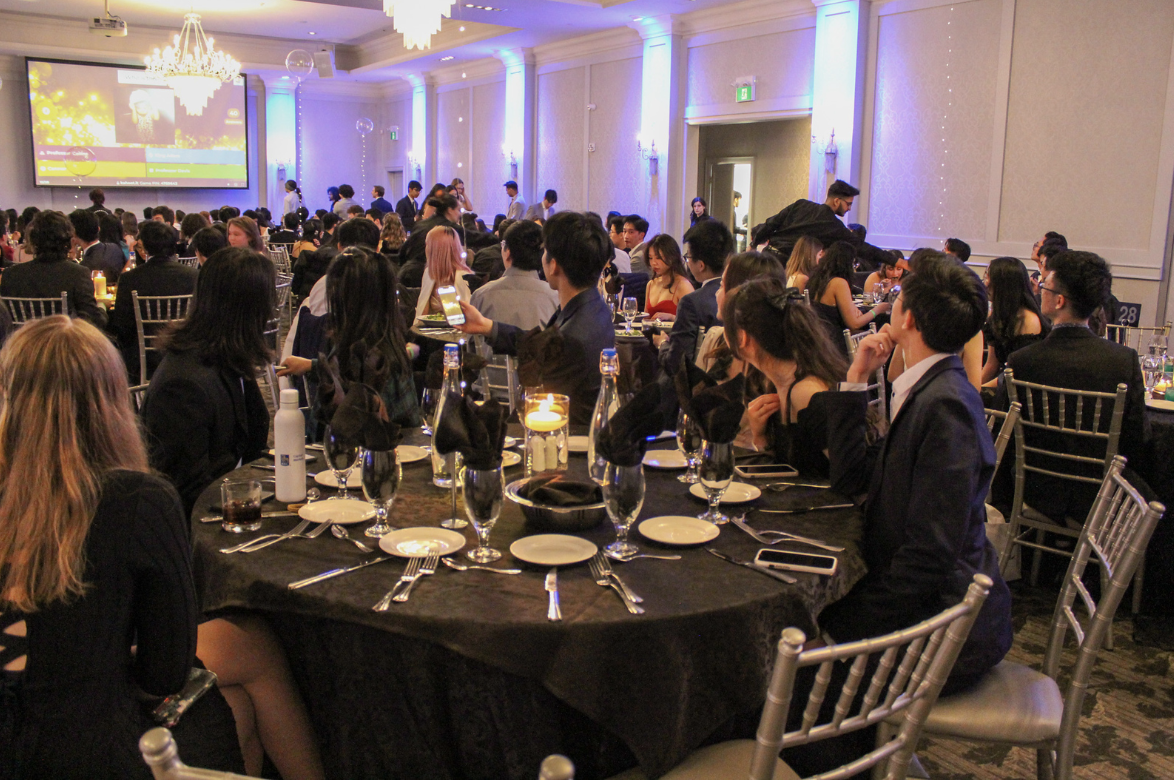
The EngSci Dinner Dance is one of the most anticipated annual traditions run by the EngSci club. It is a night to dress up, step away from problem sets for a while, and enjoy great food, music, and company within the EngSci community. Open to all EngSci students, as well as faculty members, the Dinner Dance is one of the highlights of the fall term. You can look forward to a full-course meal, a lively dance floor, and photo booths with your friends. There is always an appearance from the Skule Orchestra and The Lady Godiva Memorial Bnad to increase the energy throughout.


Nocturne (EngSci Talent Show)
Nocturne is one of EngSci’s favorite spring traditions. It is an unforgettable annual talent show where the EngSci community comes together for a night of music, laughter, creativity, and memorable moments. Open to all EngScis, Nocturne is the perfect chance to show off your talents, and everyone is encouraged to audition or go to support your friends. Hosted by the EngSci club with Professor Davis (your ESC195 professor) as the MC, the night is always packed with EngSci spirit. You might even catch some of your other professors showcasing their talents on stage!


We have more exciting surprises up ahead so follow @engsciclub on Instagram!
Going Fast – Interview with Jasmine Wu (2T5 + PEY)
Jasmine Wu
- From: Calgary, Alberta
- Major: Aerospace Engineering
- Summer Plans: Vehicle Aerodynamicist Intern at Rivian, before heading to the United Kingdom for PEY at Airbus as an Aerodynamicist
- Hobbies: “Yapping”
- Fun Fact: Jasmine is the Aerodynamics lead for University of Toronto Formula Racing (UTFR)!
From where did your interest in aerodynamics originate?
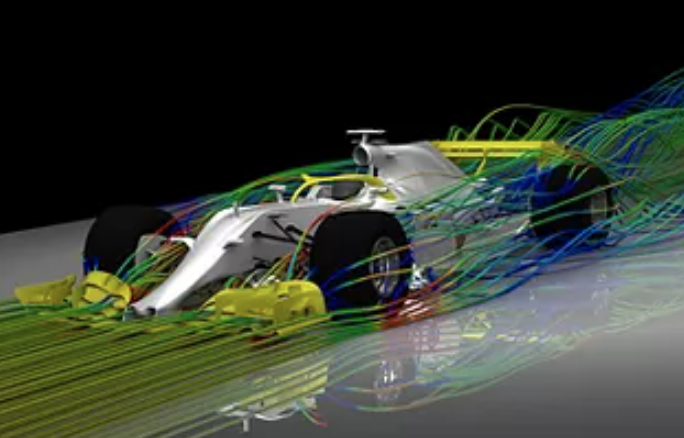
Coming into EngSci, I didn’t really know what aerospace was; I didn’t know about propulsion, aerodynamics, nor structures. I joined the University of Toronto Aerospace Team (UTAT) and specialized in aerodynamics since it was the first term alphabetically and the word “aero” was in both “aerodynamics” and “aerospace.” Eventually, following what I was interested in, I did research in Computational Fluid Dynamics (CFD) at the University of Toronto Institute for Aerospace Studies (UTIAS), moved on to aerodynamics at UTFR, and the roads converged from there.
Since there aren’t any aero courses in first year, because the curriculum is supposed to be foundational, it was my own passion that drove me. Therefore, I presented myself to my future supervisor at UTIAS stating: “I feel like I’m not getting the enrichment in the Aerospace major yet because I’m still in the foundation years, so I was wondering if I could join your lab and do research to explore this area and explore my passion.” There was an aero course in second year, and I find the Aerospace major very interesting; all of the courses I took in third year are exactly the kind of courses that I want to take, but it took some time to get there.
Discuss your progression from UTAT, to UTIAS, to UTFR, and now Rivian. How did your technical knowledge and leadership capabilities evolve from each of these experiences?
For UTFR, it was just walking into the environment at the right time. There wasn’t anyone to take over the Aerodynamics section and there was a lack of knowledge transfer at the time; UTFR at the time was just a lot of Mechanical Engineering students, and they don’t get a course about fluids or CFD until third year. Therefore, walking in with some knowledge of aerodynamics and especially CFD, I was able to present my skills and explain what I wanted to do with the Aerodynamics section, and where I could help out. From there, I was luckily given the position of Aerodynamics lead, and I worked very hard to build up the section. I went back to research again the next summer.
“By then, I had all this experience with UTFR, which was very practical hands-on work; it was the actual process of going through engineering design that companies like to see. Backing it up with my knowledge and research, I think that’s what I was able to use to sell myself to these companies that were looking to hire people.”
The one downside about aerodynamics is that it’s a very complicated field and oftentimes employers, even for interns, will want master’s or PhD students, just because they have more knowledge in the field and don’t have to be taught as much. For a lot of companies, I felt like I was fighting to prove that I could do the same work as a master’s student, which was not always the case at the time.
Do you have any more advice for students wanting to secure internships at such tech companies?
Just play to your strengths. Everyone has something on their resume that people will find interesting.
“I feel like EngScis are just so talented, smart, and interesting, too, that companies will want to hire them. It’s all about highlighting the areas you think that companies should see, as opposed to thinking that you’re unqualified for the job because you don’t have a certain experience.”
Also, you need to remember that your GPA really isn’t everything. My GPA is definitely on the lower end of the spectrum for EngSci Aerospace Engineering majors. I have many friends that have amazing GPAs, but I feel like it’s my practical experiences outside of the classroom that positively pushed me over the edge for these companies. Frankly, I’ve interviewed for some top companies who have not asked for my GPA.
How did you find that balance between your courseload, extracurriculars, and also applying to jobs and research positions?
I’ve always loved doing extracurriculars. In high school, I loaded up my schedule, but in university, I got the amazing advice to start out by joining just one design team and one club, and seeing where that takes me. I recommend students to join extracurriculars and find what they’re passionate about in their first and second years, so you can also determine what you want to do in your third and fourth years.
I think joining a design team is absolutely critical for EngScis, because it allows you to get a lot of practical experience and hands-on work. Design teams push you through the design cycle, including the building, testing, and competing, just like the engineering design process you will learn in Praxis. As I stated earlier, companies love to see that we’re balancing all of that.
I’m probably not the best person to ask about that, because for me my design team takes over my life – but I enjoy it that way! I know it’s hard to let go of grades, so I always tell people to almost, like, introduce your design team into your life little by little, and then you see how much more you can handle. You’re not immediately diving right into the deep end. Instead, you’re just trying to find where your balance point is. For a lot of people, including myself, it’s easy to get sucked into design teams and the hustle culture of it all. There does need to be some balance, and I’ve had to dial it back sometimes.
What sort of opportunities exist on design teams? How do you make the most out of your team at design team competitions and networking events?
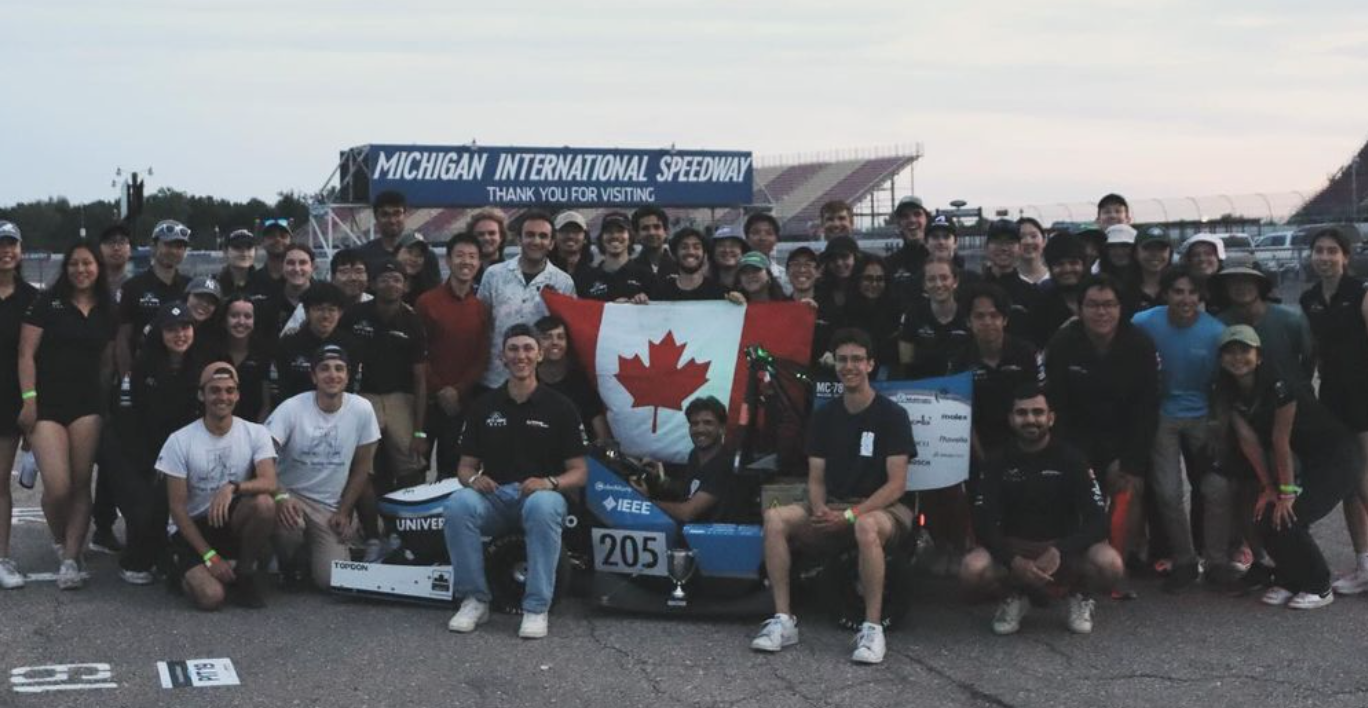
Learn how competitions work, and how teams operate. If you stick with a design team, you’ll be going back the next year in a higher position, as someone more responsible for different aspects of the vehicle and moving the team through competition. Also, use design teams and competitions as networking events. You might get money for your team or even a job for yourself; I got my summer internship through networking with a design judge at competition. Even if there aren’t many sponsors, go to talk with other teams about things like your subdivision and interests, When I went to my first competition, I went around and talked with people from other universities about aerodynamics. Competitions are such a unique experience that you only get from being on and committing to a design team. Bond with your team, get your name known, and make contacts with them. At the end of the day, don’t stress about those aspects – just enjoy the overall experience itself. I encourage every single one of my recruits to go to competition and experience it all.
Learning by Doing – Interview with Yijie Wang (2T6 + PEY)
Yijie Wang
- From: Toronto, Ontario
- Major: Robotics Engineering
- Summer Plans: Research at the Acceleration Consortium programming robots to perform biochemical experiements
- Hobbies: Reading, writing, and piano
- Fun Fact: Yijie is pursuing a Minor in Global Leadership!
Since starting EngSci, you’ve been on RSX, UTMIST, and aUToronto. Why did you join these design teams and what did you learn from them?
One of the reasons why I chose EngSci was because it exposes you to many concepts. Coming here, I had no idea what I wanted to do in the future, so it was really nice that I got experience in different courses and disciplines through the curriculum. Also, I just like to try out different things through design teams and other activities when identifying my interests. That’s one of the good things about the program and the variety of opportunities that we have: I see something I like and engage with it, and then see how it goes.
Through my experiences with different teams, it’s really cool to hear about the experiences of the people I get to meet, especially those pursuing completely different paths. I think I’ve learned a lot from them, even though what they’re doing is completely different from what I’m doing. I think that’s also a benefit about trying different things.
You also competed in competitions such as the Clarke Prize Environmental Design Challenge and Hack the Student Life. How did you identify these opportunities and succeed in them?
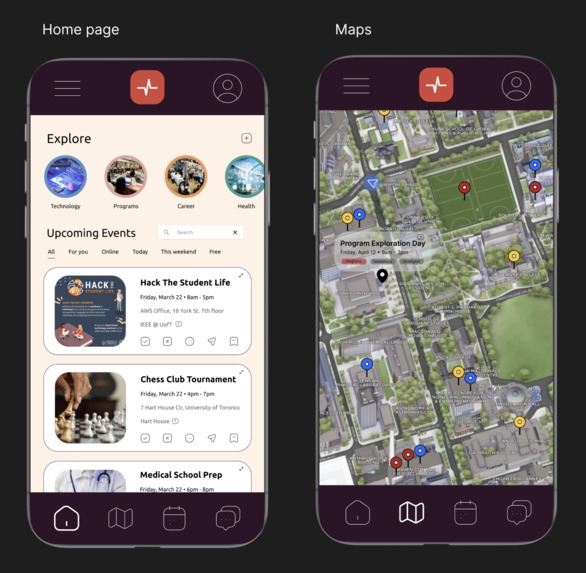
I didn’t participate in any of these in first year because I missed all of the application deadlines; I only got to know about these opportunities when I saw people doing them! In second year, I realized that it’s important to engage in endeavors outside of academics and try different things. Different design teams and organizations like IEEE and UTMIST organize various hackathons, so I followed their Instagram pages to stay up to date on application deadlines and activities. I really like hackathons because you get to work with your friends and achieve more in 24 hours than you may have thought was possible. Even if you don’t have a team going into the hackathon, you can always form a team during it. I met many people from different programs during hackathons, so I think that’s cool, and I recommend anyone to try it.
Developing ideas is the hardest part about hackathons, especially since you’re on a time crunch. We learned to discuss potential ideas before entering the hackathon. In terms of what you want to accomplish at the hackathon, I think it’s based on your interests. Do you want to create something sustainable? Do you want to create something that helps others? Keeping your goal in mind keeps you interested and motivated to work on it.
Personal projects push you to do something you can think of yourself, while learning a lot in the process. They also help build your confidence! Hackathons and team-based projects are even better because you work collaboratively and make friends. These experiences add something on top of your academics and let you see what you can do with what you learn in courses. I gained my project experiences from hackathons and design teams, and that’s how I learned these skills.
What are the benefits of personal projects? What advice would you give to incoming students who have ideas for projects but don’t know how balance them and coursework?
Personal projects push you to do something you can think of yourself, while learning a lot in the process. They also help build your confidence! Hackathons and team-based projects are even better because you work collaboratively and make friends. These experiences add something on top of your academics and let you see what you can do with what you learn in courses. I gained my project experiences from hackathons and design teams, and that’s how I learned these skills.
I think the main thing is time management. It’s important to set expectations while acknowledging that you can’t always work on school.
You need to set aside time to do something else that you are interested in. Even if you think you’re not dedicating enough time to your academics, doing things you’re interested in can motivate you to work more efficiently. Don’t discard your interests and hobbies – keep them in mind when you talk to other people, look for resources online, and find specific opportunities that interest you.
I believe that once you set your mind to do something, you’ll find time to do it, and that’s how I did some of these projects. My main advice is to try out different things. A lot of opportunities come from these activities rather than just studying well.
How did you discover the Acceleration Consortium opportunity?
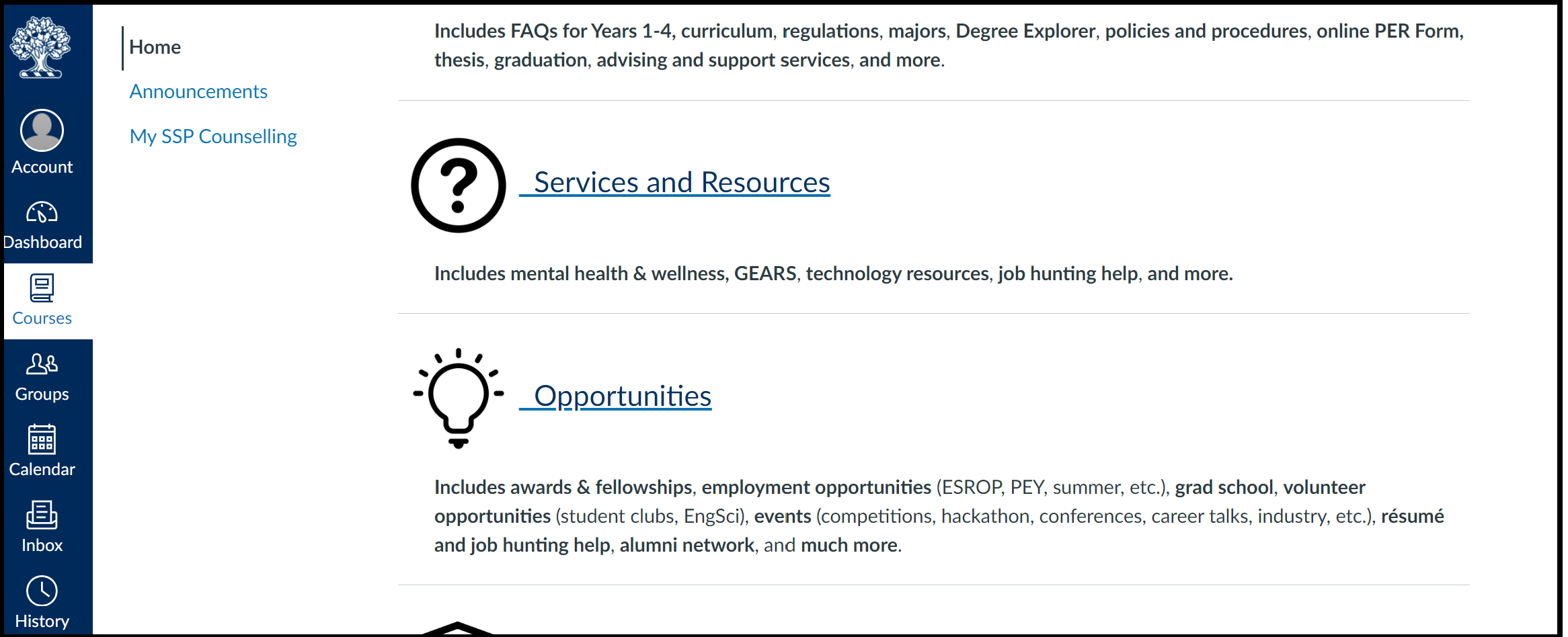
I found it on the EngSci Info Hub on Quercus, which is a great resource, especially when you don’t know where to find opportunities. They do a good job of listing many opportunities and scholarships. I also applied for other job opportunities through the Engineering Career Centre portal. I think those two resources are enough to land a job. Talking to other people and attending activities from different clubs that focus on different fields also give you a good idea of where to start.
What has been your favourite EngSci course or activity so far?
My favourite endeavor was my first hackathon experience because I had never done any hackathons before, even in high school. I was really surprised at how productive we were in 24 hours. It was an eye-opening experience, and it comes from trying out different things and figuring out your strengths and what you want to improve on.
My favorite course was linear algebra, MAT185. I liked writing proofs because it’s a very rigorous and logical process. It makes sense to me because everything is based on theorems and axioms. Another course I enjoyed in the second year was Praxis III. We got to form our own teams and build something. In the end, we had something to present to everybody, and it was really cool to see what we accomplished as second year students. We worked on garbage sorting in Bangladesh. We built a little robot that would lift garbage to an ergonomic height and used computer vision to identify recyclable materials, assisting workers with sorting. It was a cool prototype. The EngSci curriculum exposes you to many things which remain in your mind, [so that if you face a similar topic in the future] you know what to look for. This helps a lot when doing hands-on work instead of just learning the theoretical frameworks.
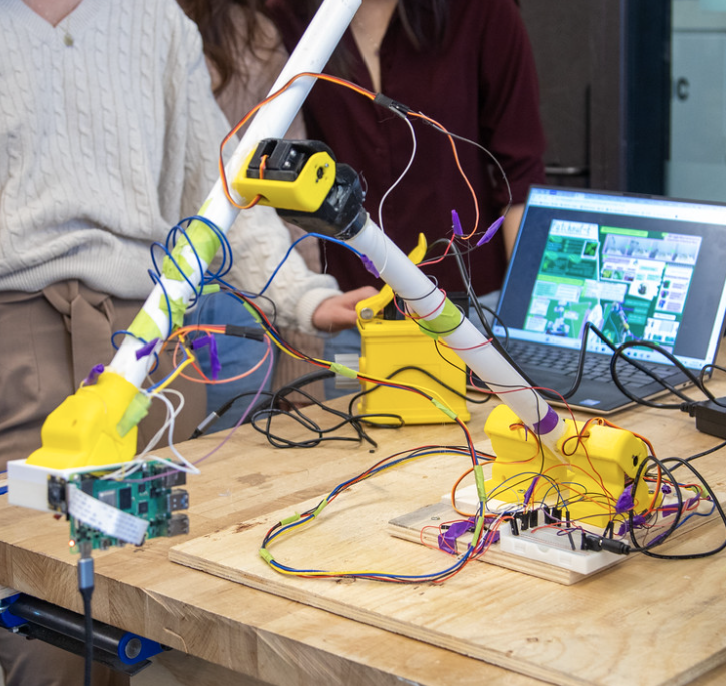
[To the incoming class], I think you’ve made a great choice coming to EngSci, not only because of the excellence of the courses and opportunities, but also the community here. Because everybody has the same schedule for the first two years, you really get to know your classmates and have a tightly knit group. And because EngSci is as hard as it is, everybody helps each other out and I think this is something that’s unique to our program. I think you’ll enjoy your time here, and good luck!
Work-Life Balance – Interview with Arnab Majumder (2T7 + PEY)
Arnab Majumder
- From: Scarborough, Ontario
- (Intended) Major: Robotics Engineering
- Summer Plans: ESROP – Global at King Mongkut’s University of Technology Thonburi, Thailand
- Hobbies: Fishing and powerlifting
- Fun Fact: During his first semester, Arnab never did homework on weekends!

Why did you choose EngSci, and how did you find the academic transition from high school to university?
In high school I was in [the International Baccalaureate (IB) program], and FIRST Robotics was my primary extracurricular. I did a few other extracurriculars, like Computer Science Club and whatnot, but IB and Robotics were my primary commitments.
EngSci leaves a bunch of my options open; it was the best program that I got accepted into, and it was where I wanted to go. At U of T, I found first semester to be pretty ok and quite enjoyable, since I was already used to a very high workload in high school. During second semester, I couldn’t ride off my previous knowledge as much, and had to learn a bit more, but it was still very doable and manageable. I found MAT185 (Linear Algebra) to be especially challenging.
During first semester, I never worked on any weekends whatsoever, except when building the bridge for CIV102 (Structures and Materials). In second semester, I tracked how much work I did down to the hour; on average, I would spend a bit more than 40 – 55 hours per week on school, which included going to lectures. I thought that it was fully manageable, and similar to a full-time job.
Can you explain how you achieved your work-life balance?

In the same way that people prioritize grades as their most important thing, I prioritized wellness and enjoying life. For me, that meant I had days off, during which I didn’t do any schoolwork; that allowed me to take weekends off, exploring the city and chilling out. However, that required me to work considerably harder throughout the week. It was all about time management; I averaged 10 hours of work per day (between school and extracurriculars) and tried to minimize my phone screen time. Honestly, I found that if I gave myself that break, I would work more efficiently, and I didn’t dread the prospect of work as much.
Aside from academics, what extracurriculars or personal projects did you do?
During first semester I was involved in the University of Toronto Aerospace Team’s (UTAT) Rocketry subdivision. I would go to their work sessions and meetings, but I’m not as involved in it anymore. On the weekends, I would go back to Scarborough and see my family, and sometimes fish with friends, mostly engaging in outdoor hobbies. And I’ve always been very consistent with going to the gym; during first semester this was slightly more difficult since I was getting adjusted to university and couldn’t maintain my old schedule, and I averaged 6 hours per week. During second semester I improved and averaged 10 hours per week. I also went on some outings with the U of T Outing Club.
Once winter break started, I did a few personal projects to improve my resume, so I learned about things that I found interesting, which in my case was artificial intelligence. I learned about neural networks and made my own from first principles. Then, I made a program to track workouts, which took me about a week total. Right after that, once I got my transcript from first semester, I started applying to jobs nonstop; I averaged 12 hours per week of just applying to jobs, and in the end, it was 78 jobs I applied to. I got four pre-recorded automated video interviews, and nothing after that. It was a little a little rough, and next time, I will apply to more jobs. Thankfully, I got the ESROP Global offer, which I accepted.
“Regarding ESROP Global, although I am fairly certain that I will not go into graduate school in the future, I definitely wanted to try the research opportunity. EngSci is the best in Canada for research, so why wouldn’t I at least try it?”
Also, hackathons, like UTRA Hacks and MakeUofT, end up being very fun in the end, especially with the nights in the common room with a bunch of your friends just trying to figure some stuff out that’s breaking your brain!
What will you do differently next year in terms of extracurriculars and other opportunities?
I want to be more involved in Skule extracurriculars. Because I was so involved in high school, I took a back seat in first year to give myself a break. During peak season, I would clock 40 hours per week in robotics, on top of IB. I did not give myself those breaks back then and I wanted one after that. But I want to get more involved next year; maybe I will join University of Toronto Formula Racing Team (UTFR) or a different part of UTAT. I learn a lot in class, but I have to do the extracurriculars to further apply my engineering knowledge.
I noticed that in second semester, I was giving myself too much time off, and because it wasn’t as easy as first semester, my grades started to drop a little bit. The whole hard rule of not working on weekends I’ll make lighter next year because at a certain point, you realize that if you work way too much in one day, your efficiency starts to drop, and then there’s diminishing returns.
What is the greatest advice you can give to incoming first-years?
“Quit doubting yourself! Have confidence in yourself; other people have done it; you can do it too. One’s confidence is proportional to their actual success in a way.”
When you’re surrounded by other people who can do it, you start thinking that you can do it too. I entered EngSci very doubtful, because people from my high school would come back and like say that “U of T Engineering was so hard.” I’m just trying to say that it’s not that bad; if you can manage your time, you can handle EngSci. Most of us do make it through in this program, and almost everybody passes. If you put in the work, you’ll get an outcome, and you can still have a life if you invest just a little bit of effort.
The primary thing I can think of is going on a 16-person road trip on a Monday to see the eclipse from 5 AM to 11 PM. As long as you can find your people, you’ll make amazing memories. Like in all honesty, in my 19 years of existence I would say that this has been the best year of my life. Basically, please take care of yourself; take care of your body, mental health, and hygiene. Then, your grades will be taken care of just like that.
What part of the EngSci experience itself also contributed to the social factor of EngSci?
During first semester with the CIV102 assignments were when I spent the longest in the common room; I had this weird challenge with one of my friends where we would do the entire assignment on the day that it released, every Thursday night. We started at 7 PM, and it didn’t matter whenever we ended, which was sometimes 2 AM.
“During exam season, studying in the common room was very helpful. Everyone bounces ideas off each other because everyone’s locked in at that point due to the pressure of exams. That’s when you start making really strong bonds with people, so if you really want to make some friends, just go to the common room.”
A lot of people will end up at Chestnut Residence. I didn’t live at Chestnut, but personally I didn’t find that to restrict my social life much because I lived really close to campus. The Chestnut groups are a lot stronger because they live with each other. You also mentioned that. Because you have classes with the same people, sometimes it can be a negative thing, like you don’t meet people outside of your program.
Also, EngSci events like Nocturne [the annual EngSci talent show] and the dinner dance were fun. You gain a very strong feeling of community, and Nocturne was a peak moment.
Finally, the Summer Orientation Program was very useful because that was where I socialized the most before EngSci; I knew no one going into EngSci from my area of Scarborough, and because of the Orientation Program, I went into EngSci already knowing, like, a hundred people, and it also helps with getting to know the campus.