Skule History and Traditions

You, as 3T0s, are the next generation of U of T engineers. Throughout your time studying here, you’ll have a chance to participate in and learn more about the rich Skule history and traditions. You’ll also create your own traditions, community, and experience and put your own spin on what it means to be a U of T engineer. Are you ready to make your mark on over 150 years of engineering legacies? 


The Start of U of T Engineering

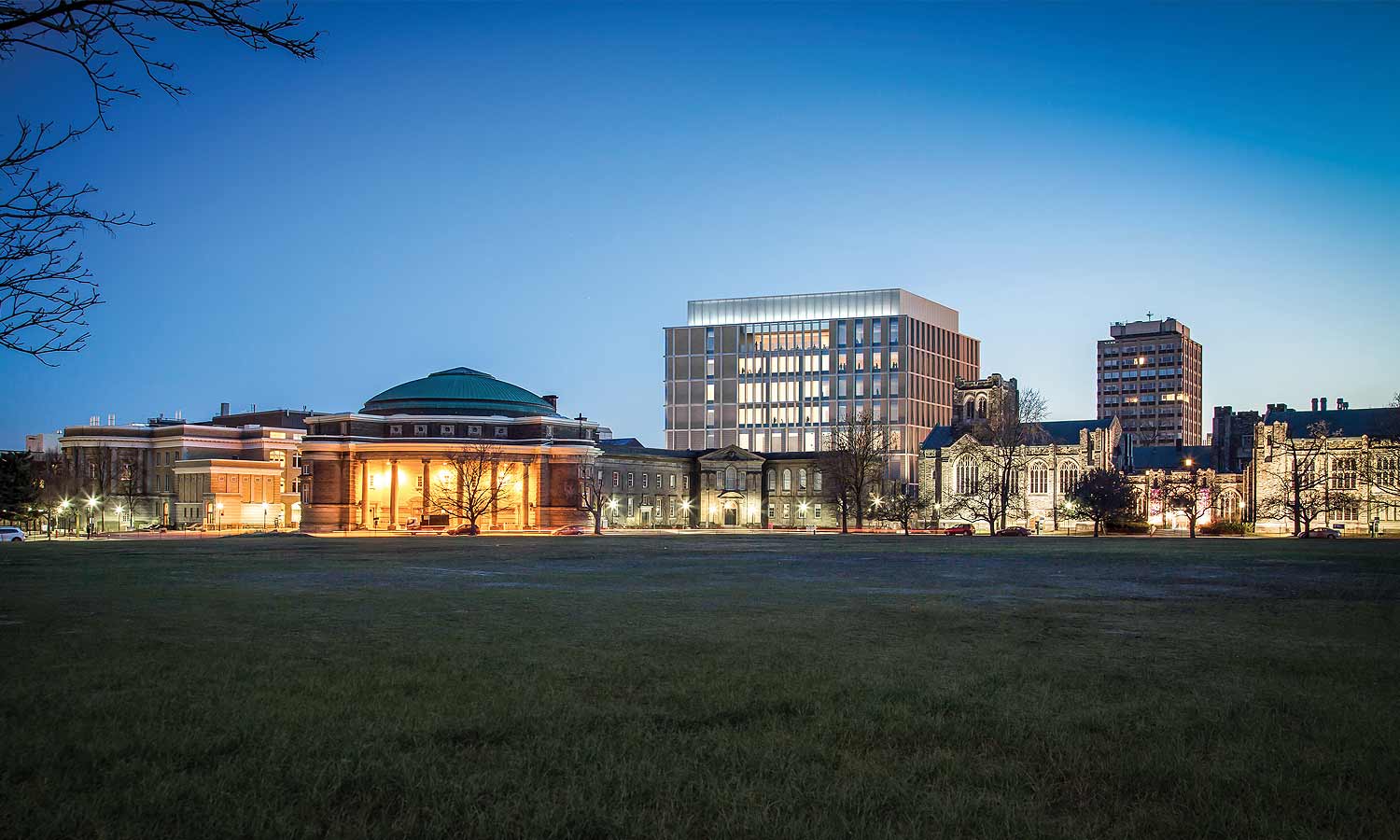
Founded in 1873 as the School of Practical Science (SPS) —later renamed Faculty of Applied Science & Engineering (a.k.a U of T Engineering)—our Faculty has grown and evolved to become the vibrant, diverse, and innovative place that we now know today. The SPS. was created to serve the needs of the growing economy and rise of technology at the time. Initially, the subjects spanned mining, mechanics, and manufacturing. Below is a timeline of the evolution of U of T Engineering: 

1873-1890

The first five Departments to in the SPS. were Civil, Mechanical, Architecture, Applied Chemistry and Mining Geology.

1913

The Department of Electrical Engineering became independent.

1925

The first Iron Ring Ceremony is conducted. The idea was proposed by University of Toronto Professor H.E.T. Haultain. Learn more about the ceremony on The Ritual of the Calling page.

1927

Elsie “Queen of the Hurricanes” MacGill graduates as the first woman electrical engineer in Canada.

1934

The Engineering Science program was founded as “Engineering Physics.” The program’s name was changed to Engineering Science (EngSci) in 1962.

1949

The University of Toronto Institute for Aerospace Studies (UTIAS) opened for graduate studies in aeronautical and space sciences.

1962

The Institute of Biomedical Electronics (now known as the Institute of Biomedical Engineering) was established for graduate studies.

1979

The Professional Experience Year (PEY) Co-op Program is created.

This is just a brief overview of the history of U of T Engineering. Today, the engineering disciplines are split into the Core 8 Programs and Engineering Science. To learn more about the history of U of T Engineering in general the U of T library has created a detailed exhibit that covers Engineering student life from 1878-1906. In addition, check out the Faculty’s history page.


Important Traditions

The Faculty of Engineering & Applied Sciences has always valued a tight-knit community with strong traditions, many of which have survived from the very beginning of the Faculty while some new ones have been created along the way.   

Over the years many students have helped document the SkuleTM community’s rich history and traditions. We can’t mention them all, but here are some notable ones:

F!rosh Week

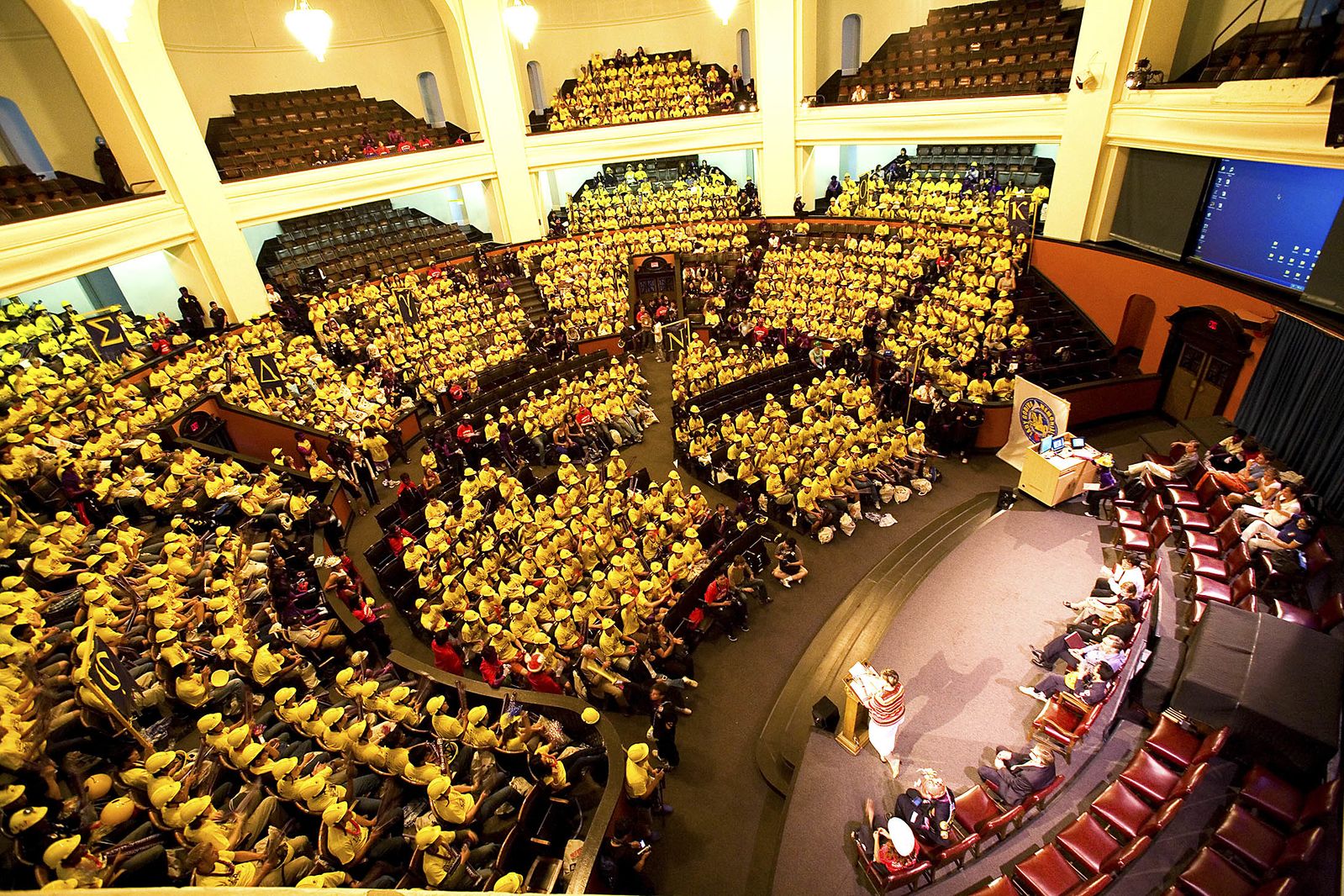
Just before the start of class each September, the Engineering Society hosts F!rosh Week, a weeklong series of events to introduce students to campus, welcome them to the community, and have some fun! Events include U of T Engineering traditions such as purple dye, Cheer Off, F!rosh Olympiks, SkuleTM Hunt, Nitelife, and much more. 

To read more about F!rosh Week and keep up to date on registration and events check out their Instagram page @froshweek, and register for the event.   

F!rosh Week 2T4 [Source]
Chariot race held in King’s College Circle in January 2020 [Source]

Godiva Week

Godiva Week kicks off the winter semester each year; the Blue & Gold committee organizes a week of charity events, competitions, and fun traditions. These primarily focus on deciding the Spirit Heads for the next year. These Spirit Heads include Mr. Blue and Gold, Lady Godiva, and Ultimate Frosh, all of whom you’ll get to meet this year at F!rosh Week.  You’ll also see the infamous chariot race!  

Iron Ring

At the end of your journey to becoming an engineer you’ll get to celebrate your hard work and receive a symbol of the responsibilities and obligations of your profession through the Iron Ring Ceremony. It’s during this ceremony that you’ll be presented with a small, faceted iron ring which you can wear on the pinky finger of your drafting hand. The scrape and sound of the ring dragging when you’re writing and drafting is there as a symbolic reminder of the importance and responsibilities of being an engineer. As you continue to work over your career your ring will become worn down and polished to mirror the honing and perfection of your skills. 

Graduating EngSci students holding up their pinky fingers to celebrate their Iron Rings.

Toike Oike

The Toike Oike Sword [Source]

Voted the #1 Engineering Newspaper on campus, the Toike Oike is “The University of Toronto’s Humour Newspaper Since 1911.” Its name comes from the early days of the Faculty, when a caretaker would ask students working in labs till later hours to “take a hike”. However, due to his Irish accent, the phrase was heard as “toy-kee-oyk.” 

Each monthly issue has its own theme, and everyone can participate in brainstorming meetings and submit their articles and graphics. You can also help with “Distros,” or distributing the newspapers. Do you know there’s a Toike wagon just for that? You might even be promoted to senior wagon engineer! 

The current Skule Cannon, since 2013 [Source]

Ye Olde Mighty Skule™ Cannon and Cannon Guard

U of T Engineering’s mascot is a cannon! It’s fired (without actual cannonballs, but with the loud bang) at events such as F!rosh Week, Godiva Week, and other major internal and external events. The Cannon is protected and fired by the Chief Attiliator (whose identity remains a secret) and the rest of the Cannon Guard. It’s been the subject of various (attempted and successful) heists by other universities over the years. You’ll get multiple chances to see (and hear!) the Cannon throughout your time at U of T. 

Lady Godiva Memorial Bnad

Created back in 1950, the Lady Godiva Memorial Bnad (intentional misspelling) is a band comprised of engineering students who love to make noise with anything from buckets to drums to trombones and even stop signs. They’re characterized by their blue jerseys, hats, and of course their instruments and noise. They perform (crash) at various Skule™ events throughout the year and have even made appearances at public events!  

If you want to join the Bnad, follow along with their music, or just learn more about this beloved group, check out their website

LGMB celebrating Toronto Subway System’s 50th anniversary [Source]

Joining Design Teams and Clubs

Subscribe to our weekly newsletter to receive an invite to the EngSci exclusive club fairs!

U of T Engineering offers lots of ways for students to get involved outside the classroom. Even before you get to campus, you’ll probably hear a lot about different clubs and design teams that you can join. This raises an important question: how do you actually get involved with them?   

First-year students are allowed and encouraged to join design teams! You don’t usually need any previous knowledge or skills to join because you’ll be taught by upper year students. Design teams connect students from various engineering disciplines and years, and even run specific recruitment initiatives to engage first-year students.    


The Skule Club Directory divides student clubs into athletic clubs, community involvement clubs, fine arts clubs, hobby clubs, musical clubs, and professional development clubs. You can also find a complete list of affiliated design teams here. While there’s a club for everyone, nobody can be involved in all clubs. It’s important to review your options before selecting which clubs most interest you. 

Summer Student Tip: It’s much more important to make meaningful contributions to the clubs you join than to join many clubs simply to show that you joined them. 

Steps To Join

While different design teams and clubs will have their own recruitment cycles, in general, the steps to getting involved are below. 

Before committing to a team, you should explore the available options.  

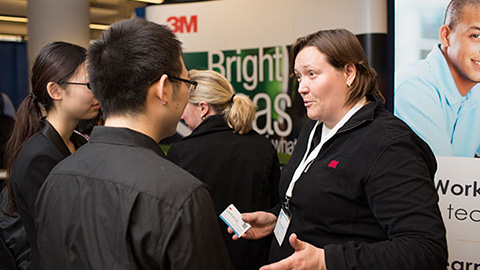
You can get to know each team or club at the Club Fairs during F!rosh Week and at our exclusive EngSci Club Fair—check the Meeting Calendar for details. You also get to see exactly what you would get to do in the team/club. Speaking to the team leads in person at these events is the best way to demonstrate your interest. 

As mentioned earlier, first-year students can join design teams and clubs. However, you shouldn’t feel pressured to do so right away. Given the demanding nature of EngSci, you might be wondering whether you’ll have enough time outside of school for extracurriculars. That’s a valid concern, but at the same time, you should know that many EngScis before you have managed to excel in academics while dedicating time to design teams, clubs, and personal projects. We encourage you to ask upper-year students for advice. They will not only inspire you to pursue your own passion projects but also share time management and learning tips.   

Some of you may have a clear career goal and know which design teams to join for experience. If you want to dive right in, go for it! Or you might be exploring career options and prefer to focus on academics at the beginning of your first year. If you find yourself in the latter group, rest assured that design teams and clubs at U of T recruit students regularly, typically at the start of each term (fall, winter, sometimes summer). So, if you prefer to settle into university life and EngSci during your first year, you can join these teams at any point throughout your journey at U of T.      

Once you’ve decided which teams/clubs most interest you, follow them on social media and sign up for their mailing lists. This is usually how teams send recruitment announcements.

Summer Student Tip! 
Once you decide which design team(s)/club(s) interest you, it’s important to unsubscribe from the mailing lists of other design teams/clubs to minimize emails. Otherwise, the clutter may cause you to miss the information you value! 

Almost every design team/club will have a general information session, during which the leads will describe the team’s/club’s structure, timeline, subteams (if applicable), and available opportunities. We recommend attending sessions for multiple teams to strengthen your overall understanding.  

Specific to design teams: 

Every design team has different subteams. Learn what these options are and pick the one that fits you best. You may choose to join a subteam to learn specific skills (e.g. joining a mechanical one to learn CAD or a software one to learn C++), or you might just see something that looks cool and go with that. 

Specific to clubs

Some clubs, especially those related to music and sports, have limited spaces. You’ll likely have to try out and demonstrate how your abilities make you a great candidate.   

Specific to design teams: 

Some teams such as aUToronto, UTMIST, and the Computer Vision subteam of UTRA’s Autonomous Rover Team have limited spaces. You’ll likely have to apply by explaining how your prior experiences and interests align with your desired position on the team. You may also need to pass a technical interview. Don’t be discouraged if you don’t get the position; try a different opportunity and apply again next semester/year with your newfound experience.  

Specific to student governing bodies:     

If you’d like to hold a position on the Engineering Society (EngSoc) you’ll have to run a campaign and get elected by the student body. To learn more about the various ways to get involved with EngSoc, visit skule.ca.

Specific to design teams:  

Congratulations on making it onto your desired team! You may need to complete an introductory task to gauge your familiarity with the team’s work. The task may be integrated into one of the early team meetings or be a separate thing altogether. It could range from setting up the correct software environments on your computer to completing a brief design challenge to doing an online course. While this may sound daunting, keep in mind that you’re already on the team, and you’re encouraged to seek support.   

The point of this task is ensuring that new members will put in the time and effort to learn the necessary skills – it isn’t meant to test what skills you already have. Do not let the task deter you from staying on a design team!

The only way to gain practical experience through design team or club positions is to put in the effort! Attend every meeting and work session, engage actively in your tasks, complete any assignments on time, and maintain a positive attitude towards your fellow members. Be a team player! Balancing academics with extracurriculars and other responsibilities can be challenging, but with determination and effort, you can manage it.  

Design teams seek driven first-year students who bring fresh ideas and a willingness to learn and grow in their roles. As long as you have a genuine interest in your work, you can make the most of these opportunities. 

Clubs offer another avenue to become a well-rounded engineer, allowing you to engage in diverse activities and develop skills in ways you might not have imagined. By participating actively, you can expand your horizons and enrich your university experience. 

Specific to design teams:

What would design teams be without competitions? If you’re a dedicated team member you might be invited to join competitions in Canada, the U.S., and around the world! Competitions are amazing environments to partake in fast-paced and high-stakes engineering work and network with other universities and potential employers.

Your team/club leads will eventually need someone to take over their position; apply to subteam lead or other positions within your design team/club to grow those highly marketable leadership abilities.    


University-wide clubs and teams 

U of T has hundreds of clubs outside of Skule™. Joining a non-engineering-related club is a great way to broaden your horizons, meet new people from other faculties, and engage in some unique activities. 


MC – Mechanical Engineering Building

The Mechanical Engineering Building (a.k.a. MC) is home to the Department of Mechanical & Industrial Engineering (MIE). Initially constructed to accommodate the expanding needs of MIE, this building has undergone several renovations and expansions to keep pace with technological advancements and the growing student body. 

Front of Mechanical Engineering Building

Notable Classrooms

MC102 Lecture Hall

The Mechanical Engineering Building houses several key lecture halls. Noteworthy among these is MC102, which is one of the most spacious lecture halls you’ll see in your first year. Like MY150 in the Myhal Centre, MC102 can usually accommodate both cohorts of EngSci students, giving you a chance to meet with the other half of your peers that you may not see very often. In your first year, you may have MSE160 lectures in this room.  Some other lecture halls that you may use in your second year include MC252 and MC254.    

Thermodynamics Lab 

You will have some of your second-year labs (likely including CHE260) in these lab spaces. 

MC102 Lecture Hall [Source]

Study Spaces 

There are multiple round tables and chairs near the labs on the second floor of MC. You can also find tables and chairs on the third floor. 

Picture of Stool-like Tables
Tables and Chairs on Upper Floors of MC

Nearby Food Spots

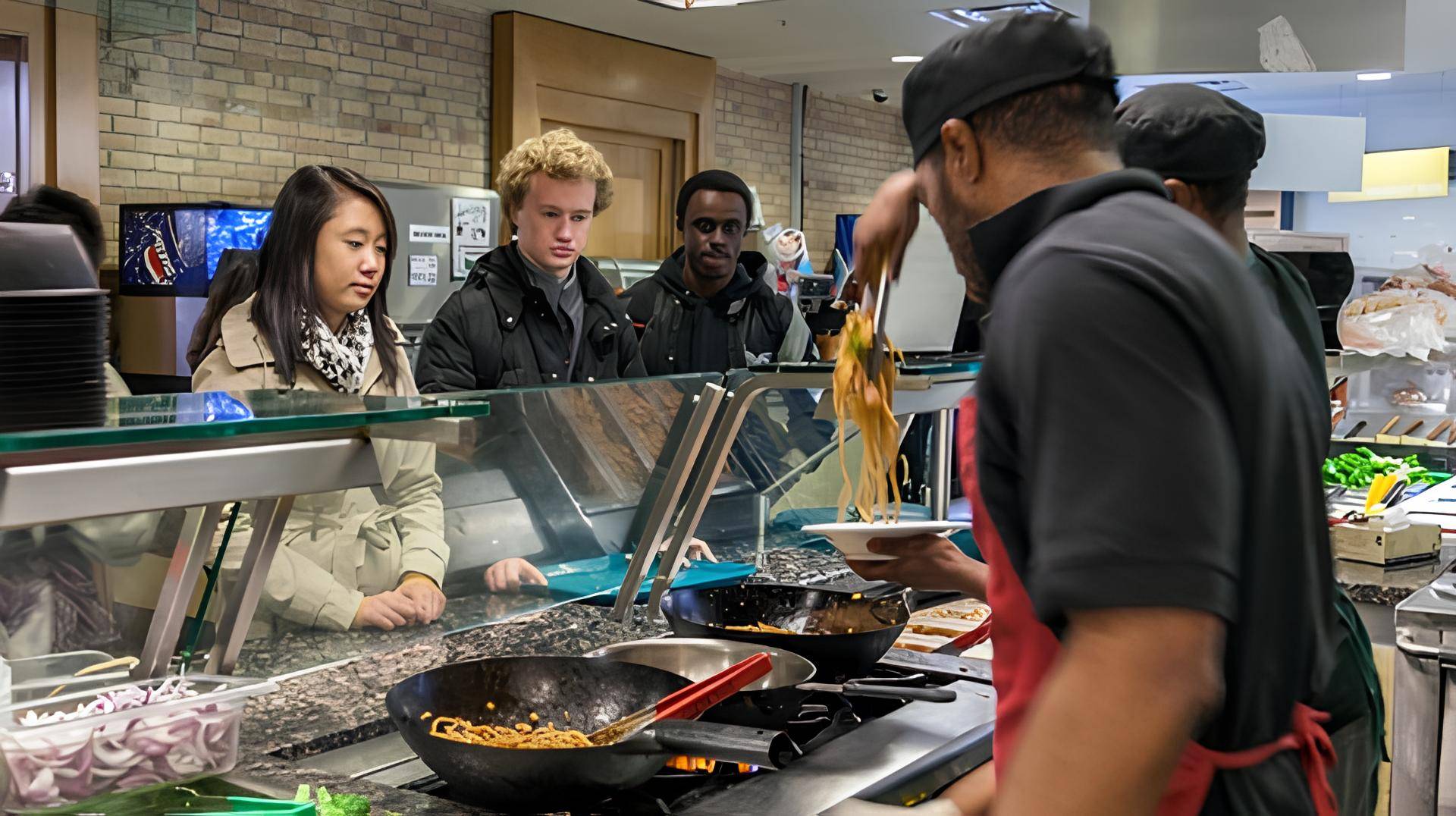
While the Mechanical Engineering Building doesn’t have dedicated dining facilities, you can easily access several nearby food spots. The nearby Sandford Fleming Building is home to the Hard Hat Cafe (temporarily closed). The MedSci cafeteria, which is full of different food options, is close by. Several restaurants on College Street are also minutes away. 


Notable Facilities & Institutes 

The offices of many faculty members and professors in the Department of Mechanical and Industrial Engineering are in this building. The department’s main office is room 105.   

There is a Machine Shop in MC 78, on the lower level of the Mechanical Engineering building. It is fully equipped with milling machines, lathes, laser cutters, and other essential tools. You can use this shop for design consultation, machining, and assembling prototypes. Note that you can only gain access to the shop after you have completed the access/training requirements.  

Picture of Machine Shop
MC78, Machine Shop

  • Address: 5 King’s College Rd, Toronto, ON M5S 1A8

  • Types of Classes Held: Lectures, Tutorials, Practicals

  • Building Facilities: Machine Shop, Thermodynamics Lab, etc.

  • Important Offices: Department of Mechanical and Industrial Engineering

Engineering Mathematics, Statistics & Finance


The median and the mode walked into a bar.

The bartender asks, “Where’s your other friend?”

The median says, “We don’t like him anymore. He’s mean.”


What is Mathematics, Statistics, and Finance?

The EngSci Mathematics, Statistics, and Finance (MSF) major teaches the theory behind the financial instruments and markets that impact our global economy, giving students a strong background in using engineering mathematics to tackle problems in any domain. The first of its kind in Canada, MSF provides students with the mathematical, statistical, and engineering tools they need to be successful in industries including consulting engineering, finance, the public sector, energy, aerospace, manufacturing, and more. 

Course themes include mathematics and statistics (including probability, stochastic processes, statistical computation, and econometrics), finance and financial engineering (including economics, option pricing, portfolio optimization, and real options), and computation (including numerical methods, optimization, Monte Carlo methods, and partial differential equations). MSF courses are taught by professors in U of T’s Departments of Mechanical & Industrial Engineering and Chemical Engineering & Applied Chemistry in cooperation with the Department of Statistics, the Department of Mathematics, and the Rotman School of Management. 

Photo by Dylan Calluy on Unsplash

Why Choose MSF? 

Why Choose This Major?

You’re interested in:

  • Math and statistics. Of course, you can’t escape math in engineering, but students who are particularly passionate about math might lean towards MSF (or Engineering Physics). The math in MSF is more related to data, statistics, and optimization
  • Economics or finance. MSF courses cover plenty of economic and financial theory, and techniques to analyze and predict economics. Knowing this theory is especially helpful if you want to study these subjects in graduate school.
  • Combining math and programming through data processing, simulation, and computation. 
  • Generalizing data and modelling to many fields, especially in graduate studies
  • Working in almost any industry. Everyone relies on mathematics, statistics, and finance, so you can put your degree to excellent use.

The program’s location in downtown Toronto, close to the heart of Canada’s financial sector, provides students access to professionals, companies, and opportunities.  

Where Can This Major Take You?

Recent EngSci MSF graduates have pursued graduate studies at top universities such as:

  • Columbia University
  • Cornell University
  • MIT
  • Stanford University
  • University of Michigan
  • University of Toronto

Sample employers for recent MSF graduates include:

  • BCG
  • BMO Investment Banking
  • CPP
  • Goldman Sachs
  • IBM Consulting
  • JP Morgan
  • McKinsey & Company
  • Yahoo.com

Upper-Year Insights

Matthew Wilson
EngSci MSF 2T3 + 1 + PEY

Some of the most interesting MSF courses are Financial Engineering (MIE375) and Financial Optimization Models (MIE377), both of which are taught by Roy Kwon [the chair of the MSF major] […] The foundation years give you the ability to understand and work with financial instruments, with a level of technical detail beyond what you can find almost anywhere else.

[My] advice when going into MSF is to connect the new content you’ll be learning back to the foundation years. MSF, more than most majors, will look and feel entirely different from [the foundation years]. The foundation will still be useful for everything in years 3 and 4, but you’ll have to apply it to contexts that you’ve never seen before. […] In [courses] taught through the Department of Mathematics, you’ll see similar concepts to the math and stats you’ve done before, but with different philosophies and styles behind how they’re studied and used. Similarly, in courses such as MIE375 and MIE377, you’ll be using the same math that you’ve learned in Ordinary Differential Equations (MAT292) and Calculus II (ESC195), but now applied to the world of financial instruments. The [key is to] relate the content back to what you’ve learned, rather than trying to start from scratch and understand everything all over again.”

Chair of the Engineering, Mathematics, Statistics and Finance Major   

Dr. Roy H. Kwon
Photo of Dr. Roy H. Kwon [Source]

Dr. Roy H. Kwon

Professor Kwon’s research interests lie in mathematical optimization and its applications in logistics, supply-chain management, financial engineering, and smart material design. He has a PhD in operations research from the University of Pennsylvania. Professor Kwon has published in Management Science, Naval Research, the European Journal of Operational Research, and many others. He is also a professor in the Department of Mechanical & Industrial Engineering at the University of Toronto. 

Courses in Year 1 and Year 2 That Relate to Mathematics, Statistics, and Finance

Year 1

ESC103 will give you the basics of computer-assisted computation. The lab portion of this course introduces you to mathematic programming. You’ll also be introduced to a fundamental domain of math: linear algebra. MAT185 will give you a more rigorous, pure mathematical perspective to linear algebra.

ESC180 will introduce you to computer programming, an essential tool in computation and modelling. ESC190 will teach you how to implement algorithms, such as searching, sorting, and optimizing, as well as data structures, which are objects or systems in computers that store data in a useful way. With modern finance being so dependent on data and computers, the skills you’ll gain from these courses are indispensable.

What would math be without calculus? ESC194 and ESC195 will cover a lot of calculus from a proof-based approach. A strong foundation of calculus is essential to understanding further concepts in math and stats, especially when applied to finance.

ESC101 and ESC102 will involve a lot of stakeholder communication, risk management, and collaboration as you and your team solve a real-world engineering opportunity. You might need to consider factors such as budget, and the management, project planning, and project execution skills you’ll develop during these courses will be essential for a career in MSF (or any field, for that matter).

Year 2

MAT292 will build upon the differential equations you learned in Calculus I. There are only a few types of differential equations for which we can produce exact answers using mathematical techniques. We can find an approximate solution for the rest using a computer. Differential equations are extremely important to the finance field. A derivative (the main part of a differential equation) is really just the trend of a function at any point. A trend gives us some hints about what’s going to happen next. On a simplified level, when we make predictions in finance, we’re analyzing these trends/derivatives to make a prediction.

MIE286 will cover the basics of probability and statistics. You’ll apply the techniques of these courses in MSF to gain powerful analytical and predictive tools.

ESC203 teaches you about the global implications of engineering. Since markets impact and are impacted by global events, it’s crucial to be knowledgeable about world events, policy, and sustainability throughout your engineering career.


Interesting Courses in This Major 

MIE375: Financial Engineering 

This course will cover the fundamentals of financial engineering through interest rate theory, fixed income securities, bond portfolio construction, term structure of interest rates, mean-variance optimization theory, the capital asset pricing model, arbitrage pricing theory, forwards and futures, and an introduction to option pricing and structured finance. 

MIE377: Financial Optimization Models

In this course, you’ll learn how to create optimization models for the design and selection of an optimal investment portfolio through risk management, mean variance analysis, models for fixed income, scenario optimization, dynamic portfolio optimization with stochastic programming, index funds, designing financial products, and scenario generation. Applications of these topics include international asset allocation, corporate bond portfolios, and insurance policies with guarantees.

MIE424: Optimization in Machine Learning

This course is about applying machine learning into optimization problems within finance and marketing, such as stock return forecasting, portfolio management, fraud detection, and customer segmentation. 

CHE471: Modelling in Biological and Chemical Systems

This course applies differential equations to problem-solving within biological contexts such as environmental issues, chemical and biochemical processes, and biomedical systems. Topics include physical laws, compartmental and distributed models, and conservation laws for discrete and continuous systems. 

See the full course listing for each EngSci major in the academic calendar.


Beyond First Year? 

University of Toronto Engineering Finance Association (UTEFA)

UTEFA aims to teach students about the financial industry through engaging investment activities. UTEFA hosts weekly meetings where you can learn about capital markets, compete in stock pitches, network and learn from experienced industry professionals, and more. To learn about their upcoming events, check out their schedule here.   

University of Toronto Sports Analytics Student Group (UTSPAN)

UTSPAN combines many mathematical fields to study and predict the performance of sports teams. The student group’s goals are to connect members who share a passion for sports analytics, organize and conduct research, and connect members to industry leaders in the field. UTSPAN is always working on cool projects, including working with Canada’s national basketball team. If you want to combine programming, math, and sports, you can’t go wrong with this club. Fun fact: they consistently place highly in the NFL’s annual Big Data Bowl, and even earned first place in 2023! Here is a link to their Big Data Bowl report from two years ago: 2024 NFL Big Data Bowl Projects by UTSPAN.

Clubs at the Rotman School of Management

The Rotman School of Management, much like our own Faculty of Applied Science & Engineering, has many clubs through which you can connect with industry leaders, conduct research, and engage in community and university events. The clubs cover a variety of topics related to MSF such as asset management, venture capital, finance, and more.  

Visit the Skule Clubs and Design Teams pages to find more extracurriculars. 


Check out the EngSci majors website here for more info:  


Machine Intelligence


Engineer: “What is 2 + 2?”

Computer: “I don’t know”

Engineer: “2 + 2 = 4”

Computer: “Okay, 2 + 2 = 4”

Enginer: “What is 3 + 3?”

Computer: “3 + 3 = 4”


What is Machine Intelligence (MI)?

Machine Intelligence is the study, development, and application of computer algorithms that can identify patterns in data and use these insights to make decisions when confronted with new situations. MI is enabling advancements in smart infrastructure, industrial automation, transportation, finance, medicine, marketing, entertainment, and many more fields at an extremely fast rate. The EngSci MI major covers the math, hardware, computer science, and software engineering involved in artificial intelligence (AI), machine learning, and big data analytics.  

EngSci MI balances theoretical and applied courses, covering computing (software engineering), information and intelligence (signals, search, optimization), and algorithms and data analytics (learning, statistical reasoning, decision). Students will learn through “first principles,” which establish a strong understanding of the mathematics and modelling behind AI, while getting solid experience with practical applications of MI. 

Photo by Infralist.com on Unsplash

U of T has long been a leading institution in artificial intelligence; in fact, many of the pioneers of deep learning (a subspace of artificial intelligence) are affiliated with UofT. EngSci MI, which launched in 2017, was Canada’s first undergraduate program in the field. Courses are taught by faculty members from the Departments of Electrical & Computer Engineering, Industrial & Mechanical Engineering, Computer Science, and the Robotics Group from the University of Toronto Institute for Aerospace Studies. Furthermore, the Vector Institute, an AI research institution established in 2017 with connections to U of T, provides students with unparalleled opportunities for internships and research positions in MI.    


Why Choose MI? 

Why Choose This Major?

You’re interested in:

  • the theory or application of computer science and AI 
  • a valuable skillset that can be used in any field. In addition to the enormous tech companies which rely on machine intelligence for their products and services, MI can benefit almost every company. 
  • entrepreneurship! There are many startups around the world that use machine learning to develop unique products and services. New companies are using machine learning for trading stocks, camera systems for object detection for autonomous vehicles, software for medical diagnosis, sound and music processing, and more. 

From learning the inner mathematics of machine learning algorithms to integrating your knowledge through software engineering, EngSci MI will prepare you for computer science-related jobs and research, especially those in artificial intelligence. 

Where Can This Major Take You?

Recent EngSci MI graduates have pursued graduate studies at top universities such as: 

  • Carnegie Mellon University
  • ETH Zurich
  • MIT
  • UC Berkeley
  • University of Michigan
  • University of Toronto

Sample employers for recent MI graduates include:

  • Accenture
  • AMD
  • Intel
  • Qualcomm


Chair of the Machine Intelligence Major 

Photo of Professor Kostas Plataniotis [Source]

Professor Kostas Plataniotis

Professor Plataniotis teaches at the Edward S. Rogers Sr. Department of Electrical & Computer Engineering at the University of Toronto. He received a B.Eng. degree in Computer Engineering from the University of Patras before completing his M.S. and Ph.D. degrees in Electrical Engineering from the Florida Institute of Technology. He is registered as a Professional Engineer in Ontario and is a Fellow of both the Institute of Electrical and Electronics Engineers (IEEE) and the Engineering Institute of Canada. 

Professor Plataniotis served as the Editor-in-Chief of the IEEE Signal Processing Letters from 2009 to 2011. His research interests include biometrics, image and signal processing, communication systems, pattern recognition, and digital media. 

Courses in Year 1 and Year 2 That Relate to Machine Intelligence Engineering

Year 1

ESC103 will introduce linear algebra topics, such as matrices and vectors, before moving on to computation. Computation is the process of using a computer to calculate or approximate an answer, and in ESC103, you’ll learn how to use the MATLAB programming language to automate mathematical calculations. MAT185 will extend your linear algebra knowledge through topics such as eigenproblems. Many topics in computer science and machine learning algorithms are heavily dependent on linear algebra, and computation will be essential when producing and visualizing the results of a machine learning model.

ESC180 will be your first programming course in university. You’ll learn the Python programming language, which is widely used in scientific computing and machine learning. This course will provide you with a foundation for all your future computer science endeavors.

ESC190 will be your second programming course in university! You’ll learn the C programming language, which is much more low-level and high performance (many machine learning libraries and frameworks for Python are programmed in C). Most importantly, you’ll learn about algorithm development: algorithms are sets of rules that act upon data, such as sorting, building a set with certain properties, or finding a minimum path. Machine learning is built upon algorithms, so ESC190 is indispensable to this major. The course also covers data structures, which are objects that store and organize information on a computer in a useful way; with how data-heavy machine learning is, data structures are important to the field. The course will briefly cover computer hardware; having knowledge of hardware allows programmers to use computers to their full capabilities and make more efficient and useful programs.

ESC101 and ESC102 will require you and your team to identify, frame, and develop solutions for an engineering design opportunity. The course will expose you to working with engineering requirements and various frameworks for representing product functionality, which are important aspects of software engineering theory. Furthermore, groups in the past have been able to incorporate computer programs and even machine learning into their Praxis projects.

Year 2

ECE253 teaches you how computers operate on a low-level scale. Again, understanding hardware allows MI engineers to take full advantage of their computers when creating fast and powerful software.

ECE286 will teach you all about analyzing data through various mathematical methods. Probability and statistics will be very important when interpreting the results and optimizing the accuracy of your machine learning models.

ESC203 teaches you about the societal and ethical implications of engineering. The ethics and safety surrounding AI is a critical subject. This course will help you formulate nuanced and informed arguments to articulate your opinions while considering situations from modern and historic perspectives, so that you can contribute to this important debate.


Interesting Courses in This Major 

ECE421: Introduction to Machine Learning

This course introduces the theory, algorithms, and computational toolboxes of machine learning, balancing the practical and theoretical approaches, along with experience with relevant software packages. Supervised and unsupervised learning models will be covered. 

CSC401: Natural Language Computing

This course covers the algorithms and software behind information retrieval, speech recognition and synthesis, machine translation, summarization, and dialogue. 

ECE444: Software Engineering

This course covers the collaborative software development process in open-source software and web applications, including requirements, development, testing, quality assurance, and maintenance. Plus, you’ll build some really cool software projects.

ROB501: Computer Vision for Robotics

This course covers the geometry of image formation, image processing, cameras, image feature detection, stereo vision, 3D processing, and more. You’ll discuss the use of machine learning for applications such as segmentation, object detection, and tracking, and will examine several successful robotic vision systems. 

See the full course listing for each EngSci major in the academic calendar.


Where To Get Some Experience Before Deciding? 

UTMIST is a team consisting of over 60 undergraduate and graduate students dedicated to clearing “the MIST around machine intelligence for the eager young minds.” Their Academics Department hosts lecture series dedicated to machine learning topics such as introductory workshops with PyTorch and Large Language Model seminars. Their Engineering Department consists of several subteams led by student directors, who submit proposals to recruit their own development team to pursue machine learning research projects in a six-month development cycle (these projects may be selected towards product deployment or academic publications). If you want to immerse yourself in machine learning and gain academic and professional experience, check UTMIST’s website and get involved. 

aUToronto is a student design team dedicated to building a self-driving car. In 2025 aUToronto placed first overall at the SAE AutoDrive Challenge™ II. Whether you’re interested in perception and artificial intelligence, or control, electronics, or autonomous vehicles in general, apply to aUToronto

Founded in 2004, UTRA has built robots for all kinds of purposes. Their teams include Sumo, RoboSoccer, Combat, Pacbots, Robonars workshops, and an annual hackathon called UTRAHacks. However, their Autonomous Rover Team is their most popular team and would likely be of greatest interest to prospective MI students. UTRA builds a fully autonomous rover to compete in the annual International Intelligent Ground Vehicle Competition. Check out their website to learn more about their teams and how to get involved. 


Check out the EngSci majors website here for more info:  


Energy Systems Engineering


Q: What’s a wind turbine’s favorite color?

A: Blew.


What is Energy Systems Engineering?

The Energy Systems Engineering major prepares students to design systems that satisfy the growing global need for the production and distribution of affordable and sustainable energy. You’ll learn how to tackle urgent issues in energy generation, storage, and transmission, while understanding the environmental, political, and economic impacts of your work. The curriculum focuses on clean energy, sustainability, thermodynamics, nuclear energy, control systems, and electric drives. 

The major involves courses in electrical engineering, physics, infrastructure engineering, and more; this enables graduates to design energy systems from the scale of a computer chip to the size of a large city. Many Energy Systems Engineering graduates have gone directly into the industry as consultants, engineers for energy providers, policy analysts for energy regulators, and engineers at new energy start-ups. Others have continued their education in graduate school and research.   

Energy Systems Engineering courses are taught by faculty members from the Departments of Mechanical & Industrial Engineering, Electrical & Computer Engineering, Chemical Engineering & Applied Chemistry, and U of T’s Institute for Sustainable Energy. An exciting development in the Toronto area is the establishment of the NRC Advanced Materials Research Facility, where energy researchers are engaged with clean energy research. 

Photo by Gonz DDL on Unsplash

Why Choose This Major? 

You’re interested in:  

  • Developing EV charging stations, advanced wind or hydroelectric turbines, small modular nuclear reactors, and grid-scale energy storage systems for wind and solar power. 
  • Studying all levels of energy implementation and how they interact, from particles, computer chips, buildings, smart grids, and the world.  
  • Systems that have a large impact on both people’s lives and the environment. In Energy Systems Engineering, you’ll take public policy courses which connect energy systems with economics and politics. 
  • The “science” part of “Engineering Science” Many courses in this major involve practical topics such as evaluating energy generators or constructing energy-efficient buildings. Other courses cover pure science such as electromagnetism, and nuclear energy. 

Where Can This Major Take You?

Recent EngSci Energy Systems Engineering graduates have pursued graduate studies at top universities such as:

  • Johns Hopkins University
  • MIT
  • Stanford University
  • UC Berkeley
  • University of Toronto

Sample employers for recent Energy Systems Engineering graduates include:

  • Boston Consulting Group
  • The IESO
  • Ontario Power Authority
  • Shoppers Drug Mart
  • Toronto Hydro
  • Apple
  • Google X
  • Other government agencies

Upper-Year Insights

Martin Staadecker
EngSci Energy Systems 2T3+PEY, MIT Master’s student in the Technology and Policy Program | Interned in electrical grid modelling and electrochemistry

The major has a lot of cool electives! You can focus on nuclear engineering, electrical grid design and protection, building science, or electrochemistry to name a few. My favourite course was Intro to Fusion Energy with Prof. Davis—challenging but so much fun!

This major stands out to me for its tight-knit community and its breadth of courses—electricity transmission, generation, storage, energy policy, and more—that have imparted me with a big-picture view of how our society’s energy systems work and how I might change them for the better. As a graduate, I’m excited to pursue some of the numerous career pathways the major has to offer and I feel empowered on my journey to building a more sustainable future.

Chair of the Energy Systems Engineering Major 

Photo of Professor Joseph Euzebe (Zeb) Tate [Source]

Professor Joseph Euzebe (Zeb) Tate 

Professor Zeb Tate has a bachelor’s degree in Electrical Engineering from Louisiana Tech University and MS and PhD degrees in Electrical & Computer Engineering from the University of Illinois. He’s been with the University of Toronto since 2008, when he joined the ECE department. His research focuses on combining advanced telemetry, data processing, and visualization techniques to facilitate renewable energy integration and improve the reliability and efficiency of the power grid. He’s also an executive board member of the Ontario Network for Sustainable Energy Policy (ONSEP). Read more here.  

Fun fact: Professor Tate taught ECE159 (a course you’ll take in your first-year second semester) to the 2T9 class — including your Blog Admin, Monika. 

Courses in Year 1 and Year 2 That Relate to Energy Systems Engineering

Year 1

PHY180 will introduce you to the fundamental concepts of energy, force, and momentum, which are essential to engineering and will be vital to your future courses.

ESC103 will introduce you to the basics of linear algebra with vectors and matrices. The labs in this course will teach you mathematical programming. When designing large-scale and complex energy systems, you’ll need to use computation to both produce and verify your results. MAT185 will advance your linear algebra skills, which will be important when representing electrical energy systems.

CIV102 introduces structural engineering, a topic which might be further explored in your upper-year courses. The lectures and problem sets apply these principles to real-world building design problems; when implementing energy systems that interact with buildings, your knowledge of structures and sustainable design will be an asset.

ECE159 will start from the basics of circuitry, eventually covering more advanced circuit analysis techniques. Ultimately, you’ll learn about power and methods for improving power efficiency. Whether you’re harnessing electrical energy, designing devices for energy generation or capture, or integrating energy systems into buildings and cities, electrical engineering concepts will be valuable to you as an Energy Systems Engineer.

Year 2

PHY294 is divided into quantum mechanics and thermal physics in the first and second halves, respectively. The thermal physics part is very important to energy studies: you’ll learn about thermodynamics and temperature and energy distribution, concepts which are used in all levels of energy systems design.

CHE260 is another two-part course. The first part of the course covers thermodynamics, which includes the important concept of mechanical energy; the principles of mechanical energy are used to design all modern engines. The second part of the course covers heat transfer, an important consideration in energy systems design. You’ll learn how an object’s seemingly basic features, such as its dimensions, significantly affect its heat transfer properties.

ECE259 combines fundamental physics with useful techniques from vector calculus to explore features of electricity combines fundamental physics with useful techniques from vector calculus to explore features of electricity like electric force, voltage, current, and field strength. Whether you’re harnessing electrical energy, designing devices for energy generation or capture, or integrating energy systems into buildings and cities, electrical engineering concepts will be extremely valuable.

ESC204 projects Praxis II onto a more advanced global scale. Your goal will be to develop a mechatronics project to positively impact an area of the world based on the Sustainable Development Guidelines by the United Nations. You may get a chance to work on an energy-related project in this course. Furthermore, Energy Systems Engineering is all about developing sustainable improvements for the world, so your experiences from Praxis III will be indispensable for your future career.

ESC203 is all about considering the impacts of your engineering work. Discussions and case studies about environmental impact and equity will form a significant part of the course, and the insights you gain from ESC203 will help inform your future practice of engineering as a whole (especially in Energy Systems Engineering, due to the field’s inherent ties to sustainability and global impact).


Interesting Courses in This Major

Energy Systems Engineering has a large variety of courses. The technical courses focus on petroleum, electrical, and nuclear energy, as well as earth and building science, with third-year courses having a particular focus on Electrical and Computer Engineering (ECE). Some Energy Systems-specific courses cover topics on large-scale energy distribution. We encourage you to see what courses and elective options most strongly interest you. 

MIE303: Mechanical and Thermal Energy Conversion Processes

This course examines the design and functionality of diesel engines and refrigeration systems, based on applied thermodynamics. Topics include heat engines, steam power plants, internal combustion engines, gas turbines and jet engines, fossil fuel and alternative fuel combustion, fusion processes, and fuel cells. 

CIV401: Design and Optimization of Hydro and Wind Electric Plants

This course will cover the engineering behind these plants from first principles to the various types of turbomachines. Topics include fluid mechanics, efficiency coefficients, momentum exchanges, vibration, pumps and turbines, system configuration, case studies, and more.  

ECE520: Power Electronics

This course focuses on the power electronic converters used in applications from low-power mobile devices to electric vehicles, server farms, microgrids, and renewable energy systems. Concepts will include efficient electrical energy processing, energy conversion, power electronic circuits, and controller design. 

CHE568: Nuclear Engineering

This course discusses both fundamental and applied nuclear engineering, from the structure of the nucleus to stability and radioactive decay, flux, moderation, fission, nuclear reactors, poison buildup, and health and safety considerations. 

See the full course listing for each EngSci major in the academic calendar.


Where to Get Some Experience Before Deciding?

There are plenty of student clubs and design teams you can join to further your skills and knowledge in electronics, clean energy, and sustainability. Check out the full list on the U of T Student Life Sustainability Associations page.

UTWind

UTWind is a team that unites students across engineering and environmental sciences to design and build a small-scale wind turbine. Their subsystems include aerodynamics, controls, mechanical and manufacturing, power systems, and sustainability. They compete against universities from across the world at the annual International Small Wind Turbine Contest, held at the Hanze University of Applied Science in Delft, Netherlands. In 2022 and 2024, they won first place overall! If you’re interested, feel free to drop in during a work session in the Myhal Arena.  

Blue Sky Solar Racing

The Blue Sky Solar Racing team has designed, built, and raced solar-powered vehicles since 1995. The cars are highly optimized, weighing less than 1/3 the average F1 car while reaching speeds of up to 100 km/h running entirely on solar energy thanks to the array of solar panels that cover the cars! They compete in the Bridgestone World Solar Challenge and have done well in the past. Whether you’re interested in the mechanical, aerodynamic, electrical, operational, or solar energy aspects of the vehicles, Blue Sky Solar Racing is a great place to learn technical skills and contribute to the future of sustainable vehicles. If you’re interested, attend one of their recruitment sessions. You can also see their cars on display in the Bahen Centre. 

U of T Supermileage (UTSM)

UTSM designs and builds extremely fuel-efficient vehicles. They’re currently developing a Prototype Battery Electric Vehicle and an Urban Concept Hydrogen Fuel Cell Vehicle (with the only fuel being hydrogen and oxygen, and the only byproducts being energy and water).  

In UTSM, you can expect to gain a deep understanding of efficient vehicles and sustainable energy.

Sustainable Engineers Association (SEA)

SEA works to increase general interest and awareness about sustainability, defining the term as “planning our usage of resources in order to meet our future environmental, social, and economical needs.” With their many events, seminars, career fairs, and competitions, SEA educates students on the technical aspects of sustainable design and supports students to develop and implement their ideas.  

U of T Nuclear Energy Association (UTNEA)

UTNEA seeks to spark student interest in nuclear energy and build a professional network of experts in the field. They host lectures and workshops and connect students with professionals in industry and research to spread information and awareness of the latest innovations in nuclear energy.

Visit the Skule Clubs and Design Teams pages to find more extracurriculars. 


Check out the EngSci majors website here for more info:  


Biomedical Systems Engineering


Q: What do you call an organic compound with an attitude?

A: A-mean-o acid.

What is Biomedical Systems Engineering?

Biomedical Systems Engineering (BME) combines life sciences, engineering, and physical sciences to solve fundamental biological questions and challenging healthcare problems. Biomedical Engineers design artificial organs and prosthetics, create biomaterials for drug delivery, use machine learning to improve medical imaging, and more. 

The major includes four focus areas:  

  • Regenerative medicine and biomaterials 
  • Systems and synthetic biology 
  • Neuro sensory and rehab engineering 
  • Sensors, nano/microsystems and instrumentation. 

EngSci’s Biomedical Systems Engineering major is offered in collaboration with U of T’s Institute of Biomedical Engineering (BME), a world-renowned multidisciplinary research facility. Through this partnership, the major lets you learn from and work with professors, researchers, and graduate students at the leading edge of biomedical engineering. They also have close ties to many major hospitals and other U of T departments, which provide incredible opportunities for student experience in the field.   


Why Choose This Major? 

You’re interested in:  

  • Areas of biotech, like biological systems and synthetic biology.
  • Fields related to medicine and rehabilitation.
  • Micro and nano technologies
  • Developing life-saving artificial organs (like 3D printing artificial hearts), to reduce dependency on limited donors.

Where Can This Major Take You? 

Recent graduates from this major have pursued graduate studies at top universities such as:

  • Columbia University 
  • ETH Zurich 
  • Harvard-MIT Program in Health Sciences and Technology 
  • Johns Hopkins University 
  • Stanford University 
  • University of British Columbia 
  • University of Toronto 

Sample employers for recent BME graduates include: 

  • Baylis Medical 
  • Microsoft 
  • GE Healthcare
  • Apple Health

EngSci Biomed graduates have also started companies such as Xpan, Noa Therapeutics and LSK Technologies


Chair of the Biomedical Systems Engineering Major

Professor Leo Chou
Photo of Professor Chou [Source]

Professor Leo Chou

Professor Chou teaches at the Institute of Biomedical Engineering at the University of Toronto. The Chou Lab develops self-assembling molecular technologies to solve outstanding biomedical challenges. Professor Chou has been published in various scientific journals, including Nature Nanotechnology and Advanced Healthcare Materials. In 2024, Professor Leo Chou was awarded the 2026 McCharles Prize for Early Career Research Distinction. 

Interview with Professor Leo Chou

Courses in Year 1 and Year 2 That Relate to Biomedical Engineering

Almost everything you learn in the foundation years can relate to Biomedical Systems Engineering. For example, you might design electronics and software for prosthetics, in which case courses such as ECE159 (Fundamentals of Electric Circuits), ESC190 (Computer Algorithms and Data Structures) and ECE253 (Digital and Computer Systems) will be important. If you’re interested in biomaterials, then MSE160 (Molecules and Materials) will be of particular interest. Below are just a few examples of relevant courses and their applications to Biomedical Systems Engineering.   

Year 1

MSE160 teaches you about key concepts in chemistry and materials science and their applications to current areas in biological and chemical engineering.

ESC101 and ESC102 are built around design projects, which are a huge part of the BME major. BME design projects often arise in our Praxis courses and are a great way to practice your skills in the design process. Some examples of BME-based Praxis projects are redesigning the naloxone kits used to treat overdoses, and improving hospital waiting rooms. Through interacting with communities, you’ll get exposure to consulting with healthcare professionals and patients.

Year 2

BME205 is a review and extension of high school biology. While covering topics like cell biology and anatomical systems, you’ll also be exposed to various fields in biomedical engineering, like medical devices. The biology labs that are part of this course will give you experience for future practicals in the Biomedical Systems Engineering major. You don’t need high school biology to succeed in this course.


Interesting Courses in This Major 

The courses in the BME major are vast and span categories from molecular biology to organ systems to medical device design to computer science. As mentioned earlier, you can customize your degree based on the technical electives you choose. Below are just a few examples. For a complete list, please visit the EngSci Calendar Website.   

BME410: Regenerative Engineering

This course is about the integration of regenerative medicine, clinical engineering, human biology & physiology, advanced biomaterials, tissue engineering, and stem cell and developmental biology, to create new therapies. Beginning with stem cell biology, the course works its way up to complex tissues and organs. The first half of the course involves 2D and 3D tissue and organ development, while the second half involves the integration of medical devices, technologies, and treatments into healthcare, also discussing clinical trial logistics, ethics, and processes. Students will participate in workshops, seminars, and research facility tours for projects and assignments.

MIE439: Cellular and Tissue Biomechanics

This course applies principles of mechanical engineering, such as solid mechanics, fluid mechanics, and dynamics, to living systems, discussing cellular mechanics, blood rheology, circulatory mechanics, respiratory mechanics, skeletal mechanics, and locomotion. A major, integrative group project applies these topics to biomimetic and biomechanical design.

ECE448: Biocomputation

This course is about computer algorithms that find patterns in biological data. Topics include molecular cell biology, sequence alignment, deep learning, phylogenetic prediction, structure-based computational methods, and gene finding and annotation.

BME595: Medical Imaging

This course covers magnetic resonance, ultrasound, x-ray, clinical optical imaging, and nuclear medicine, emphasizing the physics and mathematics behind each modality and its role in a clinical setting. The labs involve image reconstruction and analysis for the various imaging modalities, including a live animal imaging session.


Where To Get Some Experience Before Deciding? 

CUBE offers events like the Biomedical Engineering Competition (BMEC), where participants work together in teams to come up with solutions to solve health problems. 

These solutions are judged by people from industry and research fields.  

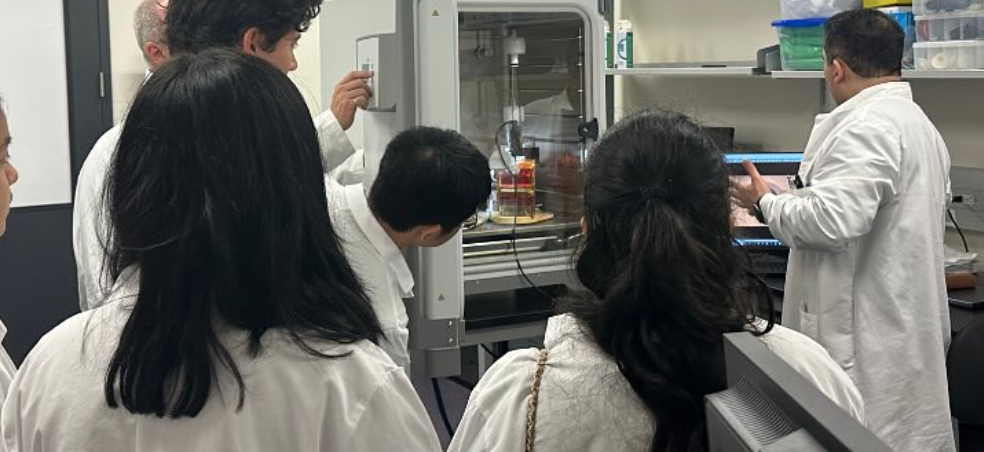
They also host a lab skills workshop series, where students can develop key lab skills such as pipetting, microscopy, and general lab safety. You also have the chance to go on field trips to see a biomedical laboratory where real researchers and scientists work.  

CUBE also hosts seminars, such as the summer research seminar for networking with Master’s and PhD students in BME. You can also attend the Professor Mixer with professors from BME or the Industry Mixer with industry professionals from biomedical companies.   

iGEM is a student association that will help you learn more about synthetic biology. Every year the team designs a synthetic biology research project and competes with other schools at the annual iGEM Grand Jamboree.  

iGEM also hosts seminars and discussions throughout the year, as a space for students interested in synthetic biology to gather and learn more about biomedical engineering design. These seminars also offer a way for you to interact with industry professionals and U of T Engineering alumni.  

UT BIONIC is a bioengineering consulting team at the University of Toronto. Each semester, they have different projects where participants design and donate accessible medical devices such as writing aids, prosthetics, and other tools that help make everyday life easier. The mission behind the club is to eliminate cost as a barrier for recipients of these tailored solutions. 

Monika’s Experience: 

I joined UT BIONIC in the second semester of first year. I really enjoyed that this club has external partners that they collaborate with, and we got to meet with the client we were designing for. There are always quite a lot of projects going on and lots of opportunity for leadership roles or even roles outside of engineering in finance or marketing. 

Visit the Skule Clubs and Design Teams pages to find more extracurriculars. 


Check out the EngSci majors website here for more info:  


Equity, Diversity, and Inclusion in EngSci

Where do you call home?

U of T Engineering is home to students from over 40 countries!

Each person brings a unique combination of culture, ethnicity, race, gender, sexuality, socio-economic background, lived experience, and perspectives that make our community such a vibrant place. This fosters a wonderfully rich learning environment that’ll expand your horizons and make you a better engineer. After all, engineers design products and processes for people coming from different lived experiences and from wide-ranging circumstances. Thus, having diverse voices yields engineering solutions that support more people in the community.   

As you join the U of T Engineering community, you’ll begin to understand why this place is so important to so many people. Over the next four or five years, you’ll not only build a foundation for your career but also form friendships and memories that’ll last a lifetime. You’ll have experiences that you’ll recount years from now. You’ll join a global community of over 60,000 alumni who have graduated before you and have a strong emotional attachment to Skule™ for those same reasons. 

U of T Engineering students at the 2023 Pride Parade [Source]
Engineering Students at Godiva Week

We want every single community member—staff, students, professors, and alumni—to feel a strong sense of belonging and support. We want everyone to achieve their full potential through an environment of mutual respect for the dignity and worth of every person.   

Equity, Diversity, and Inclusion (EDI) are core values that we all embrace, promote, and put into action. For definitions of Equity, Diversity, and Inclusion, check out this page. 

You have an important role to play in achieving this goal! We hope this post will help you understand your role in helping U of T and EngSci create a unique and supportive community.  You’ll learn how our engineering student body has evolved, what it looks like today, and our goals for the future.   


History of Equity, Diversity, and Inclusion in U of T Engineering

Today, U of T Engineering is represented by a diverse student body, but this wasn’t always the case.  

Engineering has exclusionary origins. Historically, the engineering profession was primarily open to white males in the middle or upper class. The term “engineer” actually has origins in the military, which was, of course, a very male-dominated domain.  

As social norms changed, so did engineering schools in Canada, albeit slowly. The first woman to graduate with an engineering degree from U of T was Elsie Gregory MacGill in 1927. Our Faculty’s first female permanent academic staff was Marion Bassett in 1958. Students and academics from racial and ethnic minority groups also started to enter the profession. Since then, we have made progress towards gender equity and greater representation of many cultures and minority groups. Our first-year class is now approximately 40% women. It’s also culturally and ethnically diverse with about a third of students coming from outside of Canada.  

Photograph of the past Cannon Guard [Source]
Historically, the engineering profession was male dominated.
Women in the School of Practical Science [Source]
Gradually, more women enrolled & graduated from U of T Engineering.
Photo of U of T Engineering students at a recent Pride Parade [Source]
There is now a much greater representation of genders (binary and non-binary), as well as racial and ethnic minority groups within U of T Engineering.

What Is the Mission? Where Are We Going? And How Will We Get There?

Diversity is necessary in engineering.

It’s important to remember that engineers design solutions for real-life problems. Their work impacts everyone. If engineers don’t represent the lived experience of diverse populations, they’re unlikely to address everyone’s needs in their work, or even know what problems need addressing in the first place.     

In our view, there are three main reasons why diversity is essential to successful engineering.  

Access to fulfilling and lucrative careers should in no way be restricted by race, ethnicity, culture, sexuality, gender, religion or any other identity factor, both visible and hidden. Opportunity and success should be a truly level playing field based on abilities and character. On the flipside, all communities should benefit from engineers who understand and address their specific challenges.   

Second, we need more engineers and should recruit the best talent from the broadest pool possible. Engineers are in high demand and we have not been educating enough engineers to replace those retiring, let alone expanding the field at large. Diverse groups must be welcomed into the profession for the benefit of society, the economy, and our collective human technological capabilities.    

Finally, creativity is key to engineering innovation and diverse groups are more creative. Engineers are called on to design solutions to new, never-before-seen problems for diverse stakeholders every day. Creativity relies on one’s ability to draw connections between previously unconnected knowledge and ideas. Engineers from different backgrounds bring diverse skills, experiences, values, priorities, and knowledge to the table.  The more unique the connections that can be drawn, the more creative we can be. And innovative and creative thinking is what engineering is all about. Anyone can read a manual; not everyone can write it. 

Diversity in engineering represents justice, progress, and success in allowing equal opportunity for all people, regardless of externalities. Canada needs diversity in engineering to generate the innovation necessary for effective leadership. 


Your Role

Student Participation in ESEC [Source]

No matter your background or identity, we’re all responsible for treating each other with respect and support—whether in person or online—and to speak up when we witness disrespectful behavior.   

Be curious and educate yourself through U of T Engineering’s cultural competencies toolkits. You’re going to meet people who aren’t like you or who are from places very different from your home community.  Use this chance to learn from them about their experiences and perspective. This’ll help you grow as a person and as an engineer and will help you avoid misunderstandings. U of T Engineering has many ways for you to learn about the experiences of your classmates from different backgrounds. Check out the Black Cultural Competencies Toolkit (BCCT) or the Indigenous Cultural Competencies Toolkit (ICCT). 

Familiarize yourself with the Student Code of Conduct.

The code covers not only the rules around academic integrity but also the expectations about respectful behaviour inside and outside of the classroom, including in online spaces.  It’s your responsibility to know the rules. 

U of T Engineering is a professional faculty. Your degree will qualify you to join the engineering profession. You’re expected to develop professionalism during your time here, which includes learning how to interact courteously with anyone you meet.  

Join student groups, technical projects or social initiatives that promote equity, diversity and inclusion. Take a look at our EDI – Related Groups page.

Above all, be respectful, supportive, and inclusive of all your peers in engineering to help make this community even better. 

All of us play a part in calling out disrespectful actions. We encourage you to speak up. There are several ways you can raise a concern about bias, discrimination, harassment, or unprofessionalism.  

Sharing this information helps us not only to address specific incidents, but also to better understand where there are recurring issues or gaps in education, or supports.  

The EngSci Office encourages you to use any of the methods below to make a disclosure.    

If you experience or witness potential incident(s) of discrimination, harassment, or harmful unprofessionalism in our community, you can choose your level of involvement:    

  1. Speak to a professor or staff member you feel comfortable with to disclose the incident. 
  2. Contact your academic advisor . They are knowledgeable and compassionate individuals who can connect you with the right supports. 
  3. Use one of U of T’s’pathways for raising a concern and/or getting support. 

To learn more, visit the Faculty’s EDI page and EngSci’s EDI page. If you’re a member of an underrepresented group we hope that the resources highlighted in our other EDI post are helpful for finding community and support. 

EDI-Related Groups

As incoming students, you have an incredible opportunity to create positive change within U of T Engineering and the broader community. Over the last few years, the University of Toronto has committed to implementing EDI-related actions from several task force reports. 

U of T Engineering and EngSci are working toward achieving these goals. You can help us get there!  

EDI Resources and Initiatives

Below are some of the U of T services and faculty-wide initiatives that aim to create a healthy, creative, and productive university experience for all.  

The EngSoc Equity and Inclusivity Director promotes awareness of equity and inclusivity across the Skule™ community. They collaborate with student clubs, university services, and the Ombudsperson to foster meaningful dialogue, connect students with support, and respond to the evolving needs of the student body. 

EngSci has a grassroots initiative called the EDI Working Group consisting of faculty and staff in the Division of Engineering Science. For more information on updates and upcoming initiatives from this group, check out their webpage

The EEDIAG’s goal is open to everyone at U of T Engineering. It creates spaces for conversations about equity and diversity issues and implements initiatives that promote inclusion on campus.  

The EEDIAG hosts Open Discussions and other events open to the entire U of T Engineering community for learning, sharing experiences, and discussing ideas for new initiatives together. If you have any suggestions, questions, or would like to join EEDIAG, please email  eng.equity@utoronto.ca

The ARCDO team offers excellent free training workshops for any University member wanting to learn more about their roles and responsibilities, and strategies for advancing racial equity, diversity, and inclusion. These include workshops on allyship and events for racialized community members. 

First Nations House provides culturally  relevant services to Indigenous students for supporting academic success, personal growth, and leadership development. They offer learning opportunities for all students to engage with Indigenous communities at U of T and beyond. 


Student Community Groups

In addition to EDI resources and initiatives offered by U of T Engineering, there are a lot of student groups on campus that create community for underrepresented groups. Join them to advocate for change and see the impact of your involvement.

The Muslim Students’ Association (MSA) aims to serve and represent the needs of Muslims on- and off-campus. As the first MSA to be established in Canada, it has grown to be U of T’s largest student club at the forefront of social justice, community service, as well as academic and faith-based support. It has a membership of over 1,500 students, faculty and staff.  

NSBEHacks Organized by the U of T Chapter of NSBE [Source]

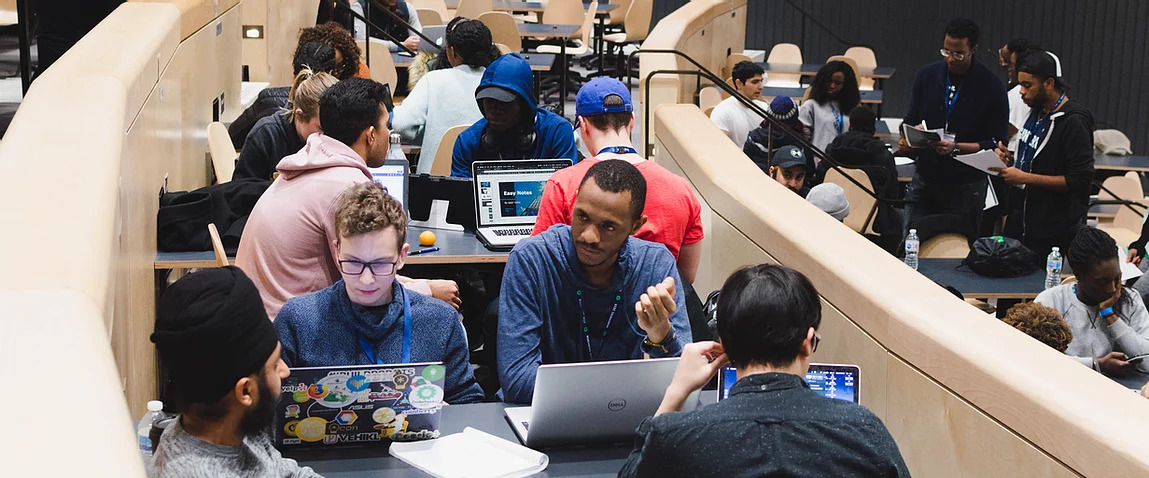
National Society of Black Engineers (NSBE) U of T Collegiate Chapter is dedicated to the academic growth and professional development, as well as the personal growth, of its club members. This club focuses on marginalized groups within the U of T space and continually partners with different companies in STEM to provide students with the opportunity to connect and network with them. Of equal importance, NSBE values building a community amongst its members to create a strong support system and build lasting friendships as we navigate the ever-changing social and professional world. Every year, they host NSBEHacks: “The first student-run hackathon dedicated to the experiences of Black individuals in technology and engineering.”

Pride Parade Organized by Engineering Positive Space [Source]

 From the Engineering Positive Space website:  
 
“Founded in 2010, Engineering Positive Space is an informal group of students, staff and faculty who work together to make U of T Engineering a place where everyone in our diverse community can feel at home. The group meets a few times each year to discuss challenges and plan for events like Pink Shirt Day and Toronto Pride, which have become U of T Engineering traditions.” 

QueerSphere is a part of the Engineering Positive Space initiative. It’s the LGBTQ+ group here at Skule. Getting people involved in and aware of the LGBTQ+ community to make engineering at U of T a more welcoming and inclusive place for all is their goal. Throughout the year, they run socials and fun events such as Pride **** and Gingerbread Bridge Building and run EDI training modules for F!rosh Week and EngSoc – and they’re hoping to do even more this year! 

WISE National Conference 2024 [Source]

U of T’s student chapter of Women in Science and Engineering (WISE)  is a community of advocates for gender equality in STEM. Through their mentorship initiatives, high school and community outreach programs, professional development workshops, and National Conference, they hope to empower women, 2-spirit, and non-binary individuals in STEM by building necessary leadership skills and confidence to achieve their full potential in any future ambitions!   

EWB U of T Chapter [Source]

EWB’s U of T chapter invests in people, providing learning opportunities and ownership of projects to nurture their growth as leaders in a community that makes an impact on global development and social and systemic change. They’re committed to challenging our own ideas and misconceptions. They expose members to the realities of poverty and privilege. The chapter experiments, fails forward, and adapts to make meaningful progressive impact for sustainable and equitable change in Toronto and the world.   

The Skule Mental Wellness Group is comprised of engineering students that’re strong advocates for mental health and wellness. They provide the Skule community with access to mental health resources and run events, workshops, and fun activities throughout the year to help relieve the stress that comes with being an engineering student. 

These are just some of the ways you can get involved in creating change within the Faculty. We can’t showcase all the amazing groups advocating for EDI in one blog post. A more comprehensive list can be found here. We hope you feel empowered to join any group that speaks to you. We’re excited about the future of engineering with all of us working together to make it a more inclusive space! 

GB – Galbraith Building

Welcome to the Galbraith Building – or GB, as you’ll learn to call it. The Galbraith Building is named after John Galbraith, the first Dean of U of T Engineering. It’s located next to the Myhal Centre for Innovation and Entrepreneurship and across the street from the Bahen Centre for Information Technology. It’s also connected to Sandford Fleming via hallways. 

Front entrance of the Galbraith Building

GB houses several historical artifacts related to the Faculty of Applied Science & Engineering. The lobby contains a statue of Professor Galbraith; it stands under the original Little Red Skulehouse sign that reads ‘School of Practical Science.’ This is an homage to our faculty’s history as an independent school. 

At the north end of the plantings in front of GB you’ll find the Rock of Ajax. Its significance dates to WWII. The Ajax Division was a temporary campus set up by U of T which was used to educate engineering students in the post-WWII period. The rock is one way we respect the duty engineers have to society and remember the sacrifices made by engineers who came before us.

Image of Little Red Skulehouse with “School of Practical Science” sign [Source]

Notable Classrooms

You’ll likely have your CIV102 tutorials in this building. Additionally, during your first year, you might use equipment from the Structural Testing Facility to test matboard bridges as part of CIV102

Picture of the Outside of the Tutorial Room
The Outside of the Tutorial Room
Picture of the Inside of the Tutorial Room
The Inside of the Tutorial Room

You will also most likely have your ECE159 labs (practicals) in this building. There is a variety of equipment meant for building circuits and outputting certain elements of the circuit. You’ll learn how to use all of this equipment during these practicals.

Picture of the ECE159 Lab Room
ECE159 Lab Room

Along with the ECF labs in the Sandford Fleming building, GB also houses two ECF labs with Windows workstations on the first floor, GB144 and GB150.  


Study Spaces 

The best place to study in Galbraith is the tables at the front entrance: the lobby is large and spacious, giving you room to avoid passersby, while the tables sit up against big windows that look over at Bahen. 

Picture of the Study Space at the Front Entrance of GB
The Tables at the Front Entrance of GB

Nearby Food Spots

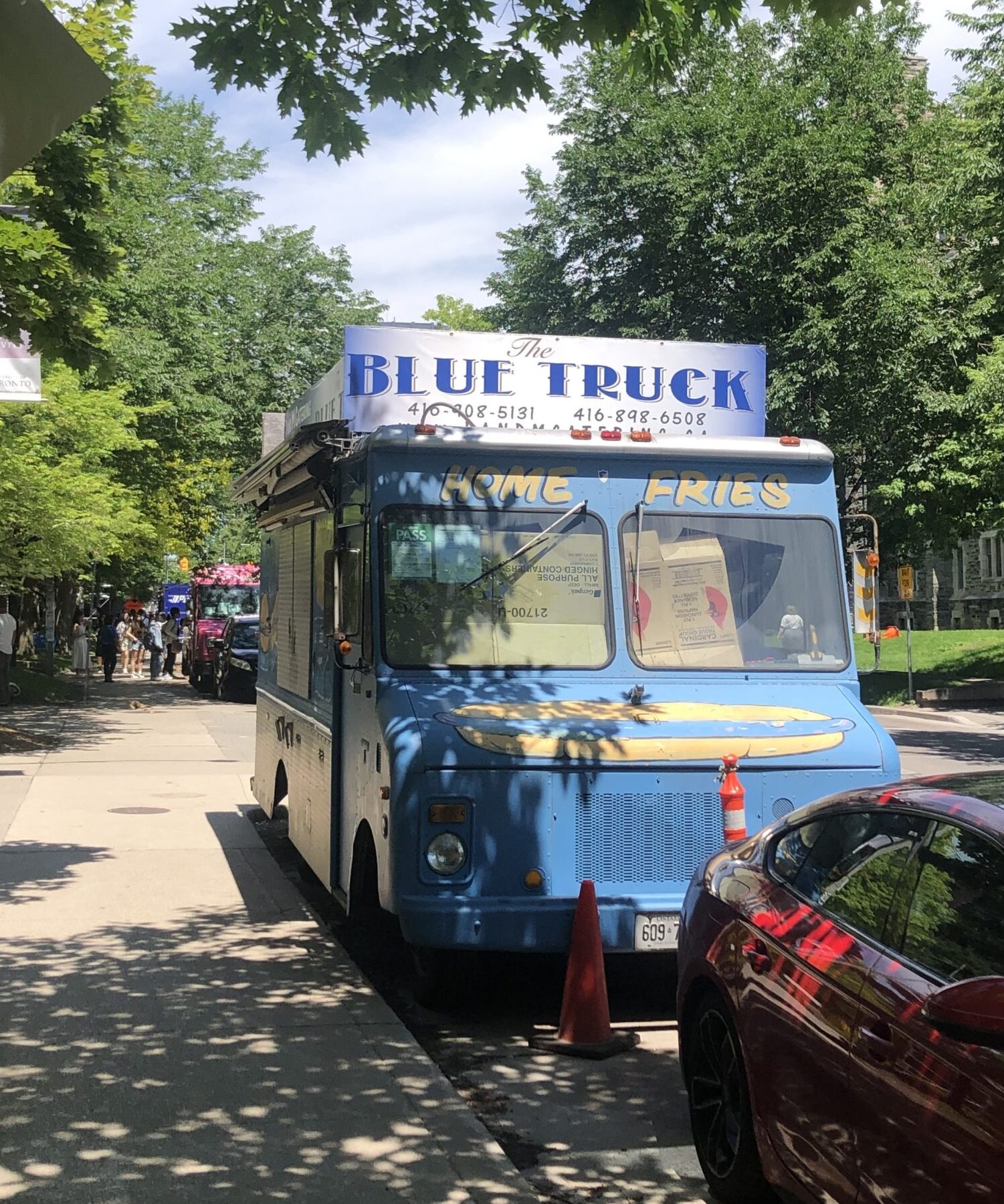
While Galbraith does not have any in-house food spots, GB is located on St. George Street, so you have quick access to the various food trucks on campus.


Notable Facilities & Institutes 

The Faculty of Applied Science & Engineering’s Registrar’s Office is located on the first floor of GB. This office can help you with understanding your tuition and fees, assisting with financial aid, distributing awards, issuing transcripts, comprehending policies and guidelines, and more. You can find out more about the services they offer here.  

Picture of the Registrar's Office
Outside of the Registrar’s Office

  • Address: 35 St George St, Toronto, ON M5S 1A4

  • Types of Classes Held: Lectures, Tutorials, Practicals

  • Building Facilities: ECF Computer Labs, ECE Labs etc.

  • Important Offices: Registrar’s Office, Outreach, Engineering Student Recruitment & Outreach Office, etc.