
Once you’ve got your timetable, you may be wondering what you’ll actually be doing throughout your day. This page will teach you about lectures (LEC), tutorials (TUT), practicals (PRA), and office hours – plus what to expect for each one.
Note: Not every course will exactly follow these descriptions. For example, some instructors may encourage more questions during lectures and fewer during tutorials. Make sure you follow these instructions. If you’d like to learn more about how LECs, TUTs, and PRAs are structured for a particular course, check out the blog post for that course and read the “Week in the Life” section.
Lectures (LEC)
- Instructors: Professors
- Session Length: 1 hour (may be longer in upper years)
- Location: Lecture halls
- Class Size: Around 150-300 students
- Attendance: Highly recommended
- Main Objective: Learn new concepts
In lectures, your professor will introduce you to new material. Your in-lecture experience will vary based on your professor; some prefer writing with chalk on a blackboard while talking (chalk-and-talk), some create PowerPoint slides, and some write digitally using a stylus while projecting to a screen.
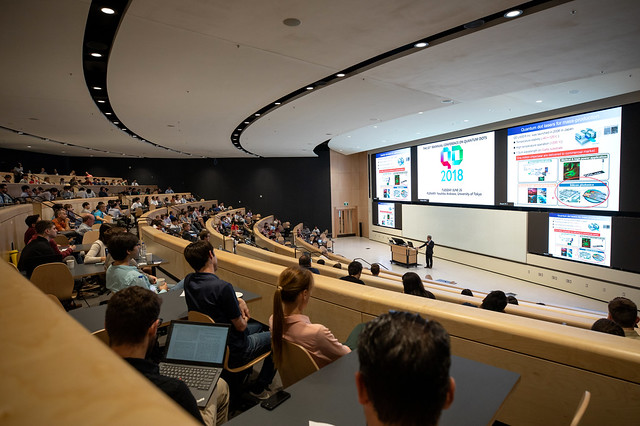
It’s important to find what works best for you, but we recommend attending all lectures.
PRO TIP: turn off your devices and notifications during lecture so your brain uses this time efficiently to focus, digest the new info you’re learning and commit it to memory.
Paying attention to what the professor is saying during a live lecture is invaluable as it allows you to note what you find important and more effectively retain concepts. You might think you can review a friend’s lecture notes later, but simply attending the lecture more thoroughly teaches you the content (potentially in less time than if you had to self-learn) and keeps you up to speed with the rest of the course.
Some of your courses will hold graded pop quizzes during lectures. Plus, lectures are a great place to see your classmates, while listening to your professors talk about engineering is both a cool experience and a great privilege. Remember, access to our top-tier professors (who are experts in their respective fields) is one of the most rewarding parts of the program, and the in-person interaction with them is part of what you’re paying for!
Tip: if your professor posts slides or template notes beforehand, print or download them before class so that you can make annotations during lecture! Depending on the course or lecture style, you may have to change your notetaking methods. Take this as an opportunity to experiment with what works best for you. Want to learn more about the most efficient note taking methods? Consult the U of T Learning Strategist’s resources (Tools & Resources – Current Engineering Undergraduates).
Tutorials (TUT)
- Instructors: Teaching Assistants (TAs)
- Session Length: 1-2 hours
- Location: Classrooms
- Class Size: Typically around 30 students
- Attendance: May be mandatory
- Main Objective: Practice, including completing examples based on lectures, clarifying lecture content, and completing quizzes (for marks)
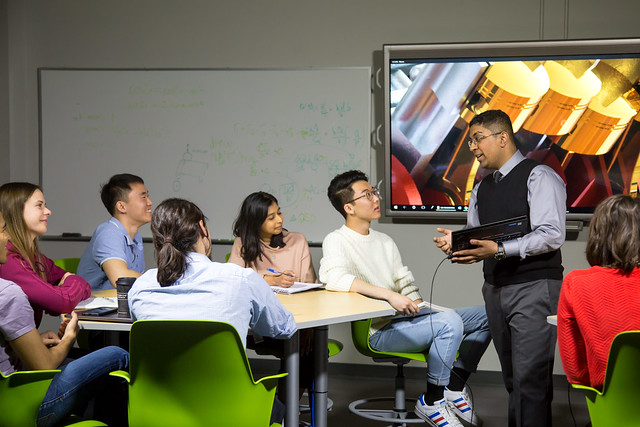
Tutorials are like a standard high school class of 20-30 students, except instead of learning new content, you’ll practice concepts that were introduced in lecture. Most TAs will use tutorials to work through sample problems, go over complex concepts from class, introduce interesting applications, or just answer your questions.
Tutorials will likely be the time where you’ll write quizzes or hand in problem sets (if applicable). TAs will usually recommend working with your classmates at your table in completing various practice problems and encourage you to share your results with others or seek guidance. Some tutorials will take attendance or hold quizzes that will count towards your grades- so attend regularly and arrive prepared.
We very strongly recommend you attend every tutorial. They’ll help you understand concepts, fill in gaps in your knowledge, and give you a lot of experience solving exam-style questions. The TAs are often senior EngScis or master’s students, and are there specifically to help you so take advantage.
Practicals (PRA)
- Instructors: TAs and Lab Coordinators
- Session Length: 3 hours or less (depending on how quickly you finish your work)
- Location: Experimental labs or Computer labs (ECF)
- Class Size: Around 40 students or less
- Attendance: Usually mandatory
- Main Objective: Apply your learning in the real world
The activities during your practicals depend on the course. For example, practicals for physics courses will require you to conduct experiments, while practicals for courses like Praxis I, II, and III will often have a similar structure to their tutorial counterparts.
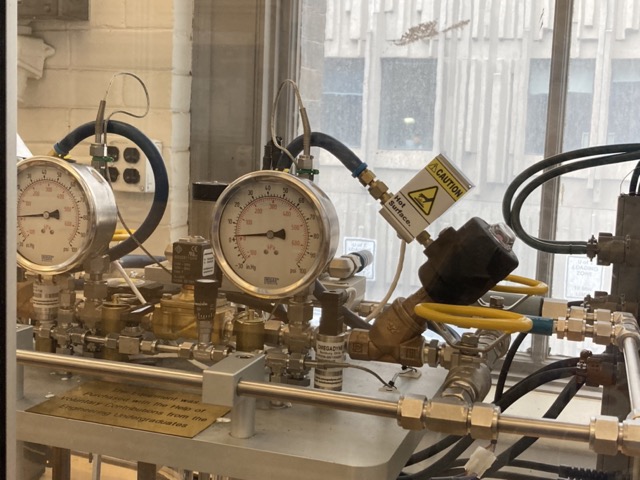
Some courses will require you to write lab reports based on the experiments or work done during practicals, while others won’t. For experiment-based practicals, such as for PHY180, the sessions may not be mandatory every week, or you may have mandatory practicals every other week. In these cases, note which weeks are mandatory for you, as this may differ from your peers in the same lecture cohort.
The Secret Weapon…Office Hours
- Instructors: Professors and/or TAs
- Session Length: Varies
- Location: Instructor’s office, classrooms or virtual
- Class Size: Varies
- Attendance: Optional
- Main Objective: Ask questions about course material, upcoming exams/assessments, etc.
Office hours are specific times during the week when you can get extra help directly from professors and/or TAs. They are typically held in the instructor’s office or online. These will not be included in your timetable but are set by each course instructor individually. At the beginning of the term, professors will announce office hours that fit into students’ timetables.
Professors and TAs hold regular office hours throughout the semester, with some instructors offering additional sessions before major assignments, midterms, and exams.
What Can You Gain from Office Hours?
- Strengthen your understanding of lecture concepts and course material.
- Get insights directly from the people who write the exams, especially during review office hours before assessments.
- Learn about professors’ and TAs’ research interests and potential summer research opportunities.
- Explore topics that interest you and discover ways to learn more about them.
- Develop relationships with instructors, who may later be able to serve as references for scholarships, research positions, internships, or graduate school applications.
- Get to know your professors as people, making it easier and less intimidating to approach experienced professionals throughout your degree.
Office hour schedules will be shared at the beginning of the semester, so be sure to take advantage of them early and often.